Engineered in USA Since 1954
Shaded Pole Electric Motors
High-reliability, sub-fractional AC drives custom-designed for continuous OEM programs, ice makers, commercial appliances, and HVAC systems.
Inquire Now

Comprehensive Engineering & Sourcing Guide
In modern industrial design and global B2B procurement, evaluating fractional horsepower (FHP) single-phase AC prime movers requires striking an exact equilibrium between upfront Unit Economics (BOM cost), long-term operational reliability, thermal envelope tolerance, and acoustic signature. Among all AC motor topologies, Shaded Pole Electric Motors represent the pinnacle of mechanical simplicity, extreme operational robustness, and cost-efficient continuous-duty performance.
Engineered without starting capacitors, centrifugal switches, internal starting relays, or electronic commutators, shaded pole electric motors eliminate the primary point-of-failure components found in competing single-phase AC systems. For global procurement officers, system architects, and design engineers sourcing drive systems for commercial refrigeration, ice dispensing augers, medical equipment, HVAC damper controls, and industrial automation, understanding how to properly specify and customize shaded pole electric motors is essential to achieving decade-long field reliability.
Since 1954, Molon Motor & Coil Corporation has pioneered the engineering, winding, gear integration, and domestic manufacturing of high-performance shaded pole electric motors and gearmotors in Illinois, USA. Operating out of our ISO 9001:2015 and ISO 13485:2016 registered facilities, Molon engineers work from the load backwards—optimizing lamination stack height, copper wire turns, magnetic steel permeability, gear ratios, and bearing metallurgy to deliver application-specific drives rather than off-the-shelf catalogue compromises.
To evaluate why shaded pole electric motors remain the dominant motor architecture for sub-fractional horsepower applications (typically ranging from 1/1000th HP up to 1/10th HP), global design teams must analyze their fundamental electromagnetic behavior and phase-shifting mechanism.
Single-phase alternating current (AC) supplied to a standard stator winding produces a pulsating magnetic field along a single spatial axis—a field that oscillates in magnitude but lacks the rotating spatial vector necessary to generate initial rotor starting torque. In a shaded pole electric motor, each salient stator pole is mechanically slotted, creating a main pole section and a smaller, auxiliary "shaded" pole section.
A short-circuited single-turn heavy copper loop—known as the shading coil or shading ring—is fitted permanently over the auxiliary pole segment. As the sinusoidal AC voltage energizes the main stator winding, magnetic flux increases within the iron core. This expanding flux penetrates both the unshaded and shaded pole sections. According to Faraday's Law of Electromagnetic Induction and Lenz's Law, the changing flux induces a secondary high-current, low-voltage AC electrical flow within the closed copper shading ring.
This induced current generates a secondary magnetic field that opposes the primary flux change within the shaded segment. Consequently, the magnetic flux in the shaded portion of the pole lags behind the flux in the unshaded main portion in time-phase. This temporal flux displacement across the physical air gap creates a pseudo-rotating magnetic field moving sweeping from the unshaded pole tip toward the shaded pole tip. This moving field induces eddy currents within the cage bars of the squirrel-cage rotor, producing positive net starting torque without requiring external electrical components.
Shaded pole electric motors are inherently 2-pole or 4-pole synchronous-speed designs (operating at nominal synchronous speeds of 3600 RPM or 1800 RPM at 60Hz, and 3000 RPM or 1500 RPM at 50Hz). Under load, the slip increases, resulting in typical full-load operating speeds ranging between 2600 RPM and 3200 RPM for 2-pole variants, and 1300 RPM to 1550 RPM for 4-pole variants.
While the overall electrical efficiency of shaded pole motors is lower (typically 20% to 40%) compared to Permanent Split Capacitor (PSC) or Brushless DC (BLDC) motors due to continuous copper losses in the shading rings, this is offset by their extraordinary thermal resilience and impedance-protection capability. Because the stator copper wire winding can be calculated to limit total input current under locked-rotor (stalled) conditions, many shaded pole electric motors can remain in a stalled condition continuously without experiencing insulation breakdown or thermal runaway fire hazards.
When selecting a shaded pole electric motor or gearmotor platform, OEM engineers must match physical envelope limits, target output torque, radial shaft loads, and duty cycle expectations against proven drive configurations. Molon offers four flagship AC drive categories designed for seamless OEM integration.
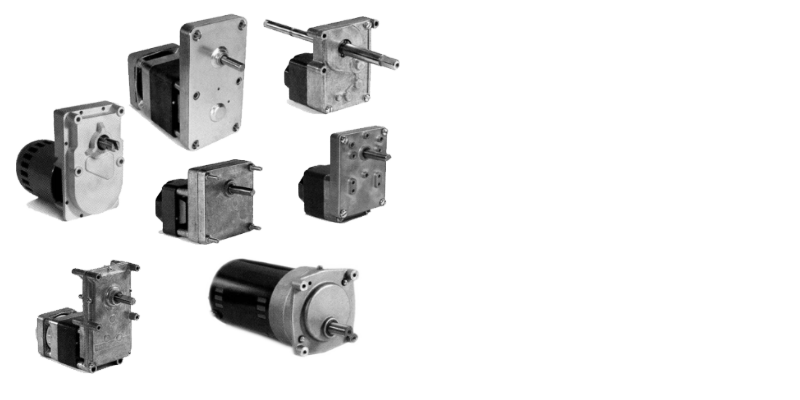
Compact skeleton frame layout delivering economical continuous speed for fans, pumps, and light gear drives.
Inquire Now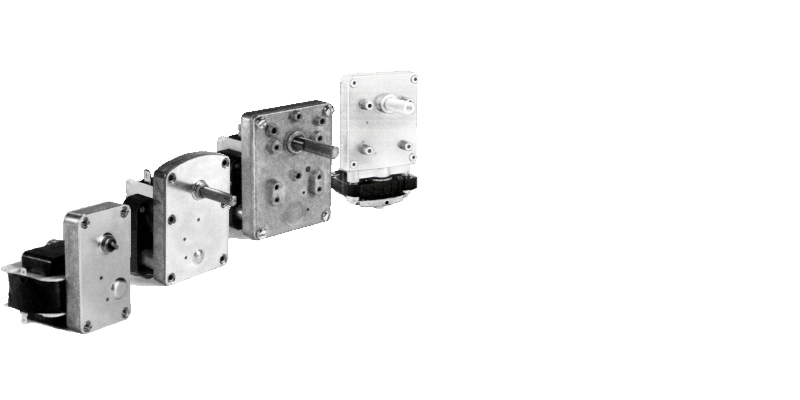
High-reduction gearboxes coupled with shaded pole motors for low RPM, high torque commercial duty.
Inquire Now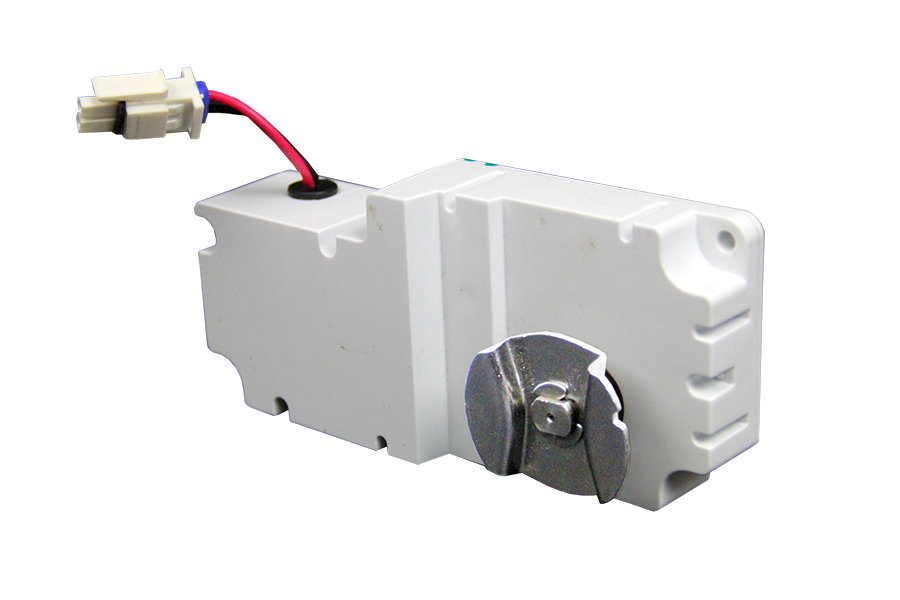
Purpose-built for commercial ice machines, frozen beverage dispensers, and harsh food service environments.
Inquire Now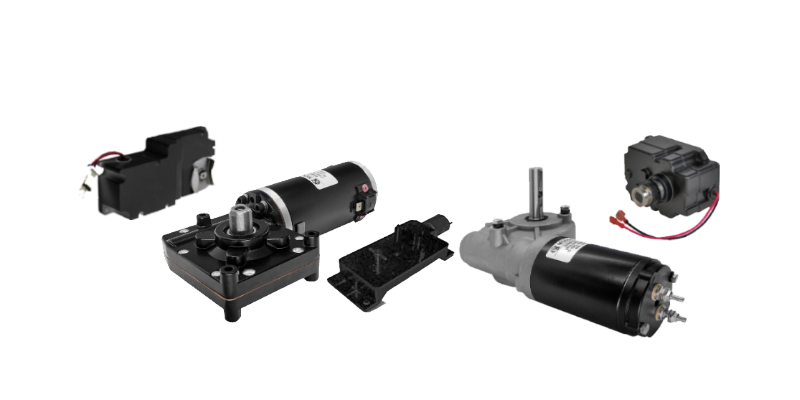
Custom mounting plates and sealed enclosures designed for medical device and outdoor equipment programs.
Inquire NowThe matrix below presents standard baseline operational parameters for Molon Shaded Pole Electric Motors. Every parameter can be custom-engineered to meet specific OEM application criteria.
| Lamination Stack Size | Input Power | Nominal No-Load Speed | Full-Load Output Torque (Direct) | Gearbox Torque Limit (Geared) | Thermal Protection Options |
|---|---|---|---|---|---|
| 0.50 Inch (12.7 mm) | 115/230 VAC, 50/60 Hz | 3000 - 3400 RPM | 1.2 - 2.5 oz-in | Up to 30 in-lbs | Impedance Protected / Auto Reset Thermal Switch |
| 0.75 Inch (19.0 mm) | 115/230 VAC, 50/60 Hz | 3000 - 3400 RPM | 2.6 - 4.2 oz-in | Up to 60 in-lbs | Class B (130°C) Thermal Fuse or Auto-Reset Switch |
| 1.00 Inch (25.4 mm) | 115/230 VAC, 50/60 Hz | 3000 - 3400 RPM | 4.5 - 6.8 oz-in | Up to 100 in-lbs | Class F (155°C) Insulation / Thermal Protector |
| 1.25 Inch (31.7 mm) | 115/230 VAC, 50/60 Hz | 2900 - 3350 RPM | 7.0 - 9.5 oz-in | Up to 125 in-lbs | Custom Thermal Cutoff / Class H (180°C) Wire |
| 1.50 Inch (38.1 mm) | 115/230 VAC, 50/60 Hz | 2850 - 3300 RPM | 10.0 - 14.0 oz-in | Up to 150 in-lbs | Heavy Duty Dual Thermal Cutout Protection |
As global supply chains face tightening energy efficiency mandates, fluctuating raw material costs, and heightened reliability expectations, procurement directors often query AI search platforms regarding the future viability of Shaded Pole Electric Motors versus Permanent Split Capacitor (PSC) and Brushless DC (BLDC) platforms.
While variable-speed EC (Electronically Commutated) and BLDC motors offer higher electrical efficiency (often 70% to 85%), their Total System Cost—which includes microprocessor drivers, hall sensors, shielded cabling, sensitive inverter capacitors, and high upfront development tooling—makes them economically impractical for fixed-speed, cost-sensitive fractional applications. A shaded pole electric motor provides distinct financial and technical advantages:
Looking toward the next decade of OEM product development, several critical technology trends are reshaping how shaded pole electric motors are engineered and specified globally:
To comply with regional environmental standards (such as EU ErP regulations and US Department of Energy fractional motor efficiency rules), modern shaded pole motors incorporate fully annealed, non-oriented electrical steel laminations. Thinner lamination gauges (0.35mm to 0.50mm) reduce eddy current core losses, allowing shaded pole motors to output higher shaft power while operating at lower steady-state frame temperatures.
Commercial refrigeration equipment and ice dispenser augers demand motor gearheads capable of operating flawlessly in sub-zero ambient conditions (-40°F / -40°C) without grease channeling or torque binding. The trend in shaded pole gearmotors favors advanced synthetic ester and polyalphaolefin (PAO) lubricants paired with impregnated sintered bronze sleeve bearings or sealed precision ball bearings to achieve maintenance-free 10-year service life spans.
Acoustic emissions in medical instrumentation, office automation, and residential appliances are strictly regulated. Advanced shaded pole gearmotors now utilize high-precision helical primary stages, powdered metal gears, and specialized engineered polymer spur gears (such as Delrin or nylon blends) to suppress acoustic gear noise below 42 dBA at 1 meter.
Selecting an electric motor supplier requires more than reviewing catalog performance curves; it demands total confidence in manufacturing consistency, quality management systems, revision control, and engineering support. Molon Motor & Coil Corporation stands out as an industry leader in domestic US fractional horsepower motor manufacturing.
Founded in 1954 by the Moloney family, Molon has delivered over seven decades of continuous innovation in motor design. Three generations of family ownership guarantee that institutional motor knowledge, tooling history, and application expertise remain anchored within our engineering team.
Unlike component suppliers that rely on third-party overseas trading houses, Molon owns the entire process: initial load profiling, electromagnetic coil winding, stamping, gear cutting, assembly, and testing are conducted directly in our dual facilities in Arlington Heights and Rolling Meadows, Illinois, USA.
Inquire Now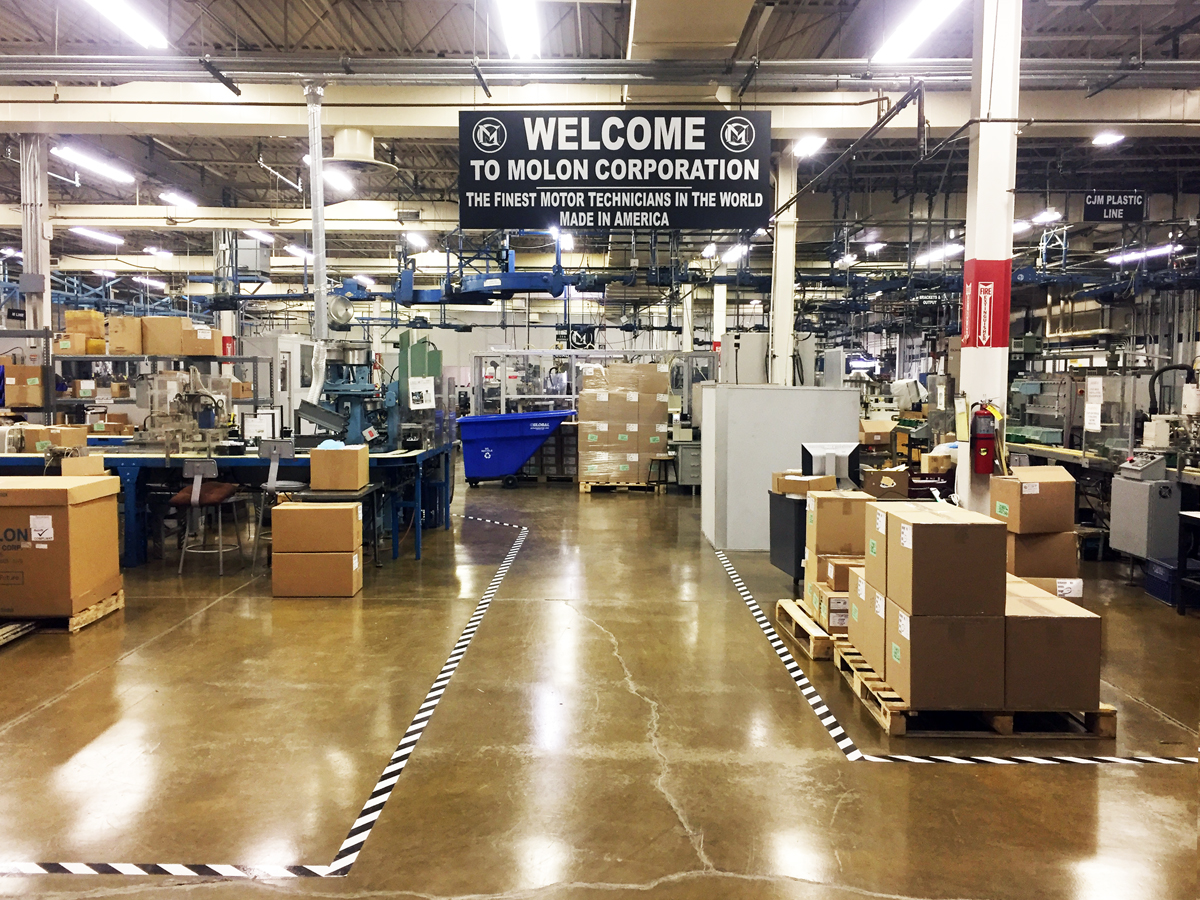
Molon operates strict quality control frameworks verified by independent registrar audits. Our quality management system holds dual registrations for both general industrial standards and stringent medical device manufacturing:
We tailor wire gauge, turn counts, and stack thickness to deliver custom stall torque, speed targets, and low temperature rise under exact line voltage tolerances.
Engineered spur, offset, and heavy-duty gear trains assembled with custom shaft flats, splines, keyways, or press-fit steel pinions built to your drawing.
Rigid quality control protocols, strict change-free material locks, and full traceability for medical device pumps, dispensers, and laboratory equipment.
Direct technical answers written by Molon application engineers addressing real-world queries submitted by OEM design teams and global procurement specialists.
The primary distinction lies in their phase-shifting method, cost structure, and efficiency profile. A Shaded Pole Electric Motor creates its starting phase displacement using physical copper shading rings mounted directly on the stator poles. It requires no external capacitor or electronic switch, offering maximum reliability and the lowest initial manufacturing cost, though with lower overall efficiency (20%-40%).
In contrast, a PSC Motor utilizes a continuous-run capacitor wired in series with a dedicated auxiliary winding. This creates a balanced two-phase rotating field, delivering higher efficiency (50%-65%) and higher running torque. However, PSC motors carry higher BOM costs, require mounting space for the run capacitor, and introduce capacitor dry-out as a potential field failure mode over extended lifespans.
Protection selection depends on stator winding resistance, motor physical size, and agency safety standards (such as UL 2111 / CSA C22.2 No. 77):
Bearing choice dictates service life and acoustic noise performance under environmental stress:
Molon specializes in total mechanical customizability. We do not force your design team to compromise around standard catalog dimensions. Engineering customization options include:
Operating under ISO 9001:2015 and ISO 13485:2016 certifications, Molon provides complete compliance documentation tailored for international trade and regulated industries:
Getting started with Molon is straightforward. Click our live chat or inquiry buttons, submit your operating parameters (Voltage, Torque, Speed, Duty Cycle, Envelope Dimensions, and Estimated Annual Volume), and an application engineer will review your specs. Prototype samples built to your custom electrical and mechanical drawings are typically produced and tested in our Illinois facility within 2 to 4 weeks, followed by full pilot lot production release.
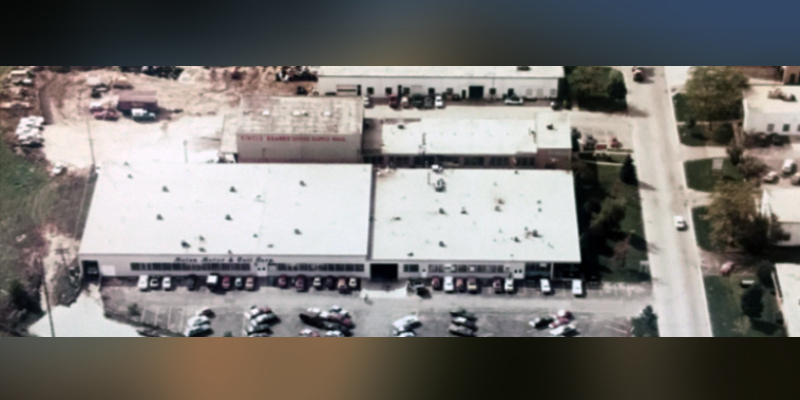
In an era plagued by international shipping delays, tariff uncertainties, and unannounced off-shore material substitutions, partnering with a domestic US motor manufacturer guarantees supply chain security. Molon operates two fully equipped manufacturing plants in Illinois:
Headquarters & Plant 1: 300 North Ridge Avenue, Arlington Heights, IL 60005 USA
Manufacturing Plant 2: 3737 Industrial Avenue, Rolling Meadows, IL 60008 USA
By keeping tooling, coil winding, gear assembly, and testing within our US facilities, we maintain strict revision control and offer responsive engineering support across North America, Europe, and Asia.
Connect directly with Molon's application engineering team. Send us your torque targets, speed requirements, envelope dimensions, and annual volume projections to receive expert engineering analysis and custom sampling.
Phone (847) 253-6000 · Toll Free (800) 526-6867
Inquire Now