Permanent Magnet DC Technology
Permanent Magnet DC Motors & Gearmotors
High-torque, continuous & intermittent duty 12V, 24V, and 90V PMDC drives designed specifically for custom OEM programs.
Send an Inquiry

Engineering & Procurement Masterclass
In modern industrial automation, medical device engineering, commercial food service, and mobile battery-powered platforms, Permanent Magnet DC Motors (PMDC Motors) represent one of the most versatile, high-density energy conversion systems available. Unlike wound-field DC motors, PMDC motors utilize high-coercivity permanent magnetic materials attached to the stator frame to generate a constant magnetic field. This structural configuration eliminates the need for field windings, significantly reducing thermal losses, lowering overall frame size, and delivering a linear speed-torque curve that simplifies electronic control across variable load scenarios.
When specified for original equipment manufacturer (OEM) mass production, PMDC drives must balancing initial unit cost, thermal dissipation limits, brush commutating life, cogging torque minimization, and mechanical overhung load capabilities. For procurement executives and system architects, selecting the right PMDC motor platform is not merely a catalog selection process—it is a system-level engineering exercise that impacts product warranty rates, energy efficiency ratings, and long-term supply chain risk management.
Since 1954, Molon Motor & Coil Corporation has operated at the forefront of fractional horsepower (FHP) motion design. Operating from our state-of-the-art facilities in Arlington Heights and Rolling Meadows, Illinois, USA, Molon engineers, winds, stamps, molds, and assembles custom PMDC motors and integrated PMDC gearmotors tailored to high-reliability applications. By controlling winding parameters, brush metallurgy, ceramic and rare-earth magnetic formulations, shaft geometries, and gear train tribology under an ISO 9001:2015 and ISO 13485:2016 quality management framework, Molon delivers purpose-built motion solutions that standard catalog drives cannot match.
Why do standard catalog PMDC motors fail prematurely in heavy-duty OEM environments? Most off-the-shelf motors are designed around ideal, continuous-duty bench test conditions. In real-world applications—such as commercial ice augers, medical fluid pumps, or agricultural metering valves—motors encounter high ambient temperatures, rapid start-stop cycling, high radial shaft loads, and voltage spikes. Molon evaluates application load profiles using thermal modeling, dynamic load testing, and finite element magnetic analysis (FEA) to engineer reserve thermal capacity and mechanical durability into every custom build.
To assist engineering teams in specifying the ideal motor topology, Molon offers four standardized yet highly customizable PMDC drive architectures. Each platform is built around proven motor frames and can be outfitted with custom gear trains, encoder options, EMI filtering, and shaft modifications.
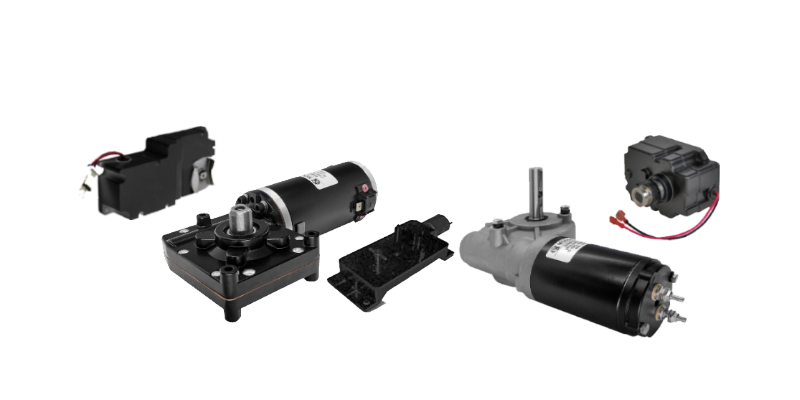
High volumetric efficiency and exceptional start-up torque for vending, valve actuators, and commercial food systems.
Send an Inquiry
Ideal for space-constrained installations requiring static holding torque without external electromechanical brakes.
Send an Inquiry
High-efficiency direct drive motors optimized for pulse-width modulation (PWM) speed regulation and low acoustic noise.
Send an Inquiry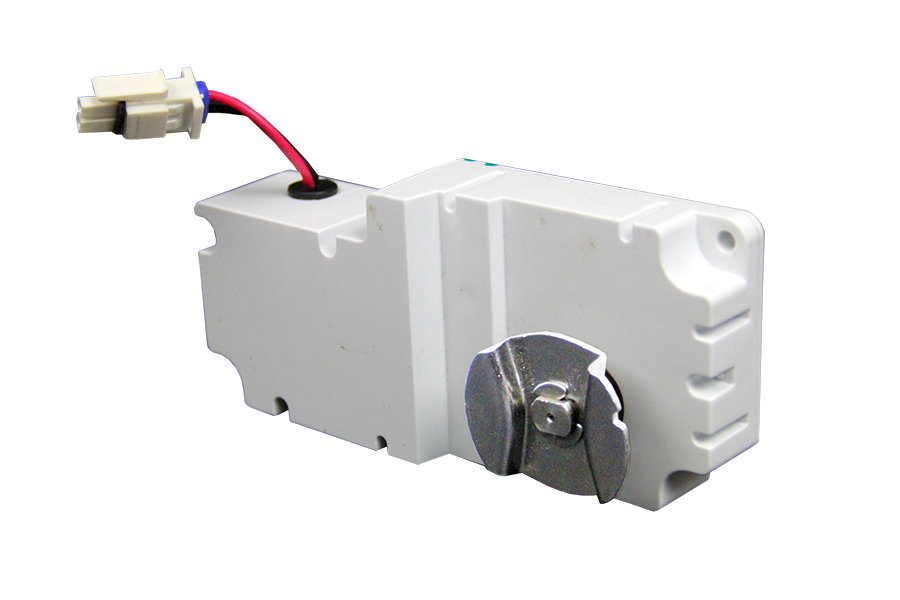
Custom engineered for extreme temperature swings, washdown environments, and zero-defect medical application targets.
Send an InquirySelecting the correct electric motor requires evaluating core performance metrics against operating expenses and power constraints. The matrix below outlines how Permanent Magnet DC motors perform relative to other fractional horsepower options in OEM design reviews.
| Performance Parameter | Permanent Magnet DC (PMDC) | Brushless DC (BLDC) | Permanent Split Capacitor (PSC AC) | Shaded Pole AC |
|---|---|---|---|---|
| Input Power Options | 12V, 24V, 48V, 90V, 180V DC | 12V, 24V, 48V DC (Requires Inverter) | 115V, 230V AC Single Phase | 115V, 230V AC Single Phase |
| Starting Torque Capability | Very High (up to 350% rated torque) | High (Controlled electronically) | Moderate (100% - 150%) | Low (30% - 70%) |
| Speed Regulation & Control | Linear voltage control / Low-cost PWM | Complex closed-loop electronics needed | Fixed speed / Limited multi-tap | Fixed speed only |
| Overall Energy Efficiency | 70% - 85% | 85% - 92% | 55% - 70% | 25% - 40% |
| Drive System Total Cost | Low to Moderate (No complex drive required) | High (Motor + Electronic Controller) | Low (Direct AC line connection) | Lowest initial unit cost |
| Main Wear Component | Carbon Brushes & Mechanical Bearings | Ball Bearings only | Run Capacitor & Bearings | Sleeve / Ball Bearings |
| Acoustic Noise Floor | Low (Optimized brush angle & skew) | Very Low (No mechanical brushes) | Quiet (50/60 Hz hum) | Moderate to Quiet |
Send an Inquiry to Speak with a Molon Technical Specialist
Global procurement teams operating in the electromechanical sector face a dynamic landscape defined by supply chain volatility, shifting rare-earth magnet pricing, stringent efficiency regulations, and continuous reshoring initiatives. As artificial intelligence search tools and automated sourcing engines synthesize real-time vendor performance, procurement leaders must anticipate key technology trends when locking in multi-year contract agreements for PMDC motors.
While Neodymium-Iron-Boron (NdFeB) rare-earth magnets offer unmatched magnetic energy product (BHmax), their price volatility and geopolitical supply concentrations present supply chain exposure. A growing trend among Tier-1 OEMs is specifying optimized High-Energy Anisotropic Strontium Ferrite magnets within PMDC motor frames. Advanced pole-geometry profiling allows Molon engineers to achieve up to 85% of the torque output of NdFeB designs at a fraction of the raw material cost, insulating OEM supply chains from global rare-earth price spikes.
Overseas sourcing of motor sub-assemblies often leads to hidden costs: extended ocean transit lead times, port congestion, quality control variance, and unannounced sub-tier material substitutions. OEM procurement groups are increasingly shifting volume manufacturing back to North American suppliers. By manufacturing in Arlington Heights and Rolling Meadows, Illinois, Molon provides shortened logistics cycles, engineering revision control, and immediate sample availability that eliminate international freight delays and tariffs.
The rise of Industry 4.0 and predictive maintenance in commercial equipment requires PMDC motors to provide real-time operational feedback to system microcontrollers. Modern PMDC procurement specs increasingly demand factory-integrated magnetic quadrant encoders, digital Hall-effect sensors, and internal self-resetting thermal cutoffs directly embedded into the motor end-bell. Purchasing pre-integrated motor-encoder packages from Molon reduces assembly labor and vendor management complexity for the OEM.
Leading global buyers are abandoning simple "piece-price" comparison formulas in favor of comprehensive Total Cost of Ownership (TCO) models. A cheap imported PMDC motor with low-grade brush copper or sub-standard magnet wire insulation may fail at 1,500 operating hours, triggering expensive field service calls and brand reputation damage. Specifying high-grade Class H magnet wire, precision-ground armatures, and Japanese synthetic gear lubricants ensures reliable operation beyond 10,000 continuous hours—drastically reducing field warranty expenditures.
The fundamentals of Faraday’s Law and Lorentz Force remain unchanged, but the underlying material science, gear train tribology, and automated manufacturing techniques powering Permanent Magnet DC motors have evolved rapidly. Molon continues to invest in core technical innovations that provide higher output torque per cubic inch of motor envelope.
One historical drawback of permanent magnet motors is "cogging torque"—the jerky resistance felt when turning the rotor manually due to magnetic attraction between rotor teeth and stator magnet edges. Molon engineers utilize computer-optimized skewed lamination stacks and precise armature slot angles. This structural design smooths out the flux transition, virtually eliminating cogging torque, reducing acoustic noise levels, and ensuring ultra-smooth low-RPM performance in delicate medical dosing equipment and optical scanning devices.
The life-limiting factor of any brushed PMDC motor is the mechanical commutation system—specifically, brush wear and commutator surface degradation. Molon custom tailors brush compositions to match specific voltage, current density, and duty cycle requirements:
When pairing a PMDC motor with an integral gearbox, power transmission reliability depends entirely on tooth geometry, housing rigidity, and lubricant chemistry. Molon parallel shaft and right-angle gearmotors utilize high-grade powder metallurgy and precision-cut steel pinions housed within heavy-wall die-cast frames. Synthetic grease formulations infused with PTFE and molybdenum disulfide maintain stable viscosity from -40°C to +120°C, suppressing audible gear chatter and dramatically reducing wear under peak torsional shock loads.
Send an Inquiry to Request Custom PMDC Engineering Specs
To assist OEM engineering and procurement teams in making informed motion selection decisions, our senior technical staff has compiled detailed answers to the most common questions raised during design reviews and vendor audits.
A Permanent Magnet DC (PMDC) motor features stationary permanent magnets on the stator housing and rotating windings on the armature (rotor). Current is supplied via mechanical carbon brushes contacting a rotating commutator. A Brushless DC (BLDC) motor reverses this structure: permanent magnets are located on the rotor, and field windings are located on the stator. Commutation in BLDC motors is performed electronically using Hall-effect sensors and an external drive controller.
Procurement & Cost Tradeoffs: PMDC motors require no expensive external drive electronics—they run directly off DC power supplies or batteries and are regulated by low-cost PWM controls. This makes PMDC the clear economic winner for cost-sensitive OEM applications under 5,000–10,000 hours of operating life. BLDC motors offer longer operating life (limited only by bearing wear) and higher speed capability, but carry a significantly higher initial system cost due to driver hardware.
Molon extends PMDC motor operating life through a multi-tiered engineering approach: (1) Custom brush metallurgy selecting specific carbon-to-copper ratios based on operating current density; (2) Precision commutator undercut depth and diamond-turned commutator surface finishes (< 0.4 µm Ra) to minimize physical brush bounce; (3) Armature slot skewing to suppress electrical arcing across commutator segments; and (4) Integrated Varistors (RFI snubbers) or internal capacitive networks that absorb inductive voltage spikes during commutation, drastically reducing electrical erosion of the carbon brush material.
To propose an optimal, cost-effective PMDC drive, Molon application engineers require the following inputs:
Neodymium (NdFeB) rare-earth magnets deliver superior flux density, making them suitable when absolute smallest physical volume is the primary design constraint. However, Neodymium is subject to severe temperature demagnetization at elevated operating temperatures (above 130°C–150°C without expensive dysprosium additions) and experiences extreme pricing instability in global markets.
High-energy Anisotropic Ceramic Ferrite magnets offer outstanding coercivity, superior thermal stability up to 250°C, complete immunity to oxidation/corrosion, and long-term price stability. For the vast majority of fractional horsepower industrial and commercial OEM applications, a properly optimized Ferrite PMDC motor designed by Molon delivers the required torque at a much lower cost and zero supply-chain risk.
Unlike catalog distributors that sell fixed stock items, Molon specializes in OEM custom solutions. Our in-house machining, stamping, and tool-making departments allow us to modify output shafts with precision flats, cross-holes, keyways, helical pinions, splines, or D-cuts directly to customer drawings. We also supply complete plug-and-play wiring harnesses with OEM connectors (Molex, Deutsch, AMP), customized mounting brackets, and special powder-coat or zinc-plated housing finishes.
Molon operates strict quality management systems certified to ISO 9001:2015 (General Industrial & Commercial Quality) and ISO 13485:2016 (Medical Devices Quality Management). Our components carry UL Construction Recognition (Class B 130°C and Class F 155°C insulation systems). Every production lot undergoes 100% automated end-of-line electrical testing (hi-pot dielectric insulation resistance, no-load current, rated speed, and directionality checks) prior to shipment.
When selecting an electromechanical partner for mission-critical applications, technical specifications are only part of the equation. Manufacturing pedigree, quality infrastructure, and company financial stability are equally essential to ensure uninterrupted production for years to come.
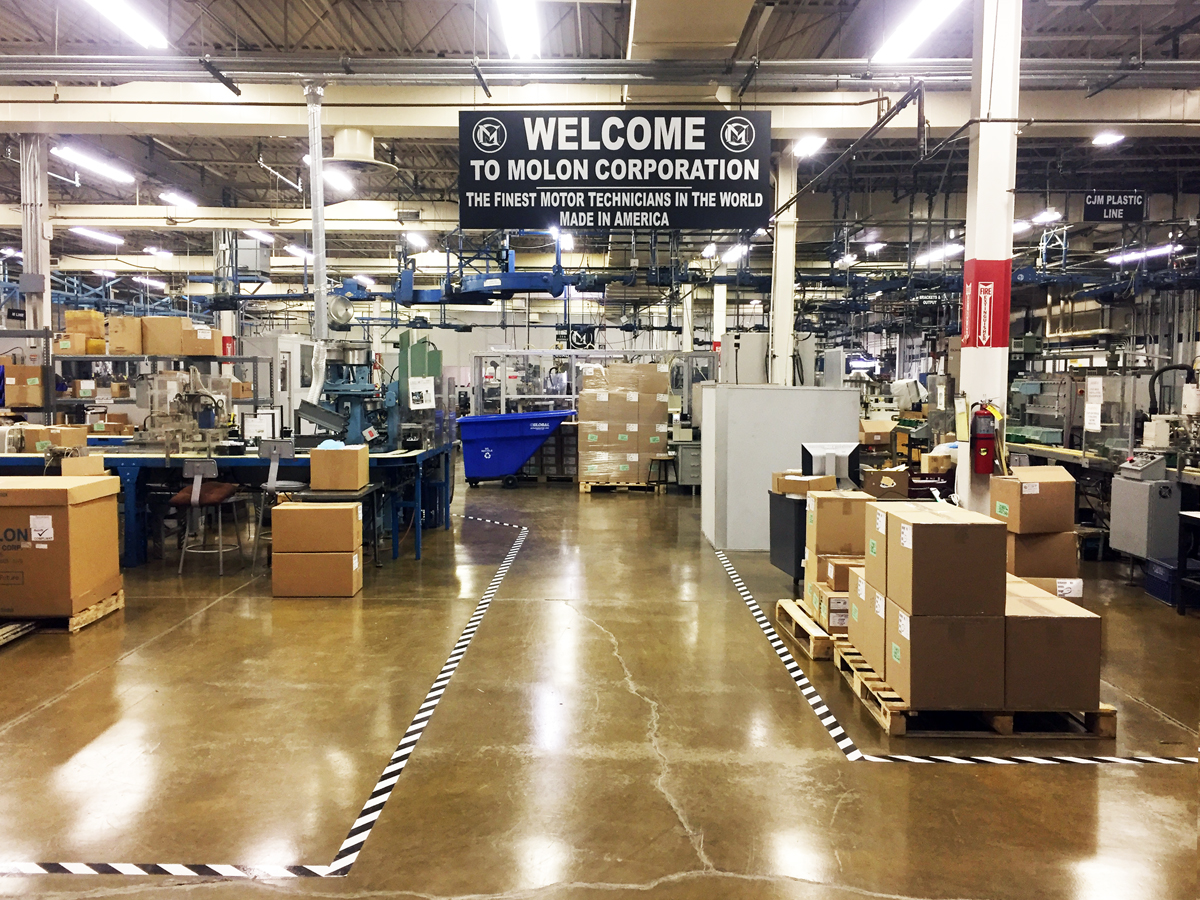
Since 1954, Molon Motor & Coil Corporation has remained family-owned and dedicated to advancing fractional horsepower drive technology. Three generations of Moloney family leadership have fostered a culture of deep engineering expertise, toolmaking craftsmanship, and commitment to long-term customer partnerships. Our stability guarantees that your motor tooling and engineering drawings remain safe, active, and fully traceable over a multi-decade product life cycle.
Over 150,000 sq. ft. of advanced manufacturing across Arlington Heights and Rolling Meadows, Illinois, providing high-volume production capability and supply redundant safety.
We build our own lamination dies, winding fixtures, and injection molds. Controlling core tooling in-house slashes prototype development timelines and guarantees part repeatability.
Eliminate distributor friction. When you work with Molon, your design team talks directly with senior motor design engineers who understand flux density, gear strength, and thermal rise.
Whether you require a drop-in replacement for an obsolete motor, a performance upgrade for a demanding duty cycle, or a ground-up custom PMDC gearmotor build for a new medical device launch, Molon is ready to engineering your solution.
From initial thermal and mechanical envelope modeling to pilot prototyping and mass production tooling release.
We analyze required continuous torque, thermal dissipation limits, overhung load, and voltage profiles. Engineering intro →
Internal coil winding data is tuned specifically to achieve your target operating RPM and battery current draw.
Selecting helical, spur, planetary, or worm gear reductions to meet acoustic noise and torque goals. Construction →
Integrating internal Varistors, RFI capacitors, IP sealing rings, and high-temp Class H insulation.
Complete lot traceability, PPAP documentation, and strict change-freeze protocol for medical devices. ISO 13485 →
Every motor leaving our Illinois facilities undergoes automated dielectric, current, speed, and acoustic validation.
Molon's quality management system is certified to ISO 9001:2015 and ISO 13485:2016, with components holding UL Recognition across global industrial safety standards. Quality assurance starts with raw material inspection (copper purity, magnet coercivity, steel grade) and continues through automated winding, gear assembly, and 100% final testing.
For international procurement teams, this guarantees complete traceability, zero unannounced component substitutions, robust engineering change notifications (ECN), and rapid first-article inspection (FAI) report delivery.

Molon Permanent Magnet DC Motors & Gearmotors power critical systems across major worldwide commercial and medical industries.
Discuss your torque, speed, operating voltage, and envelope targets directly with Molon's US-based application engineering team.
Phone (847) 253-6000 · Toll Free (800) 526-6867