Engineered in USA Since 1954
Planetary Gearhead Stepper Motors
High Torque Density, Low Backlash & Exceptional Radial Load Capacity for OEM Applications.
Get a Quote

Technical White Paper & Global Procurement Guide
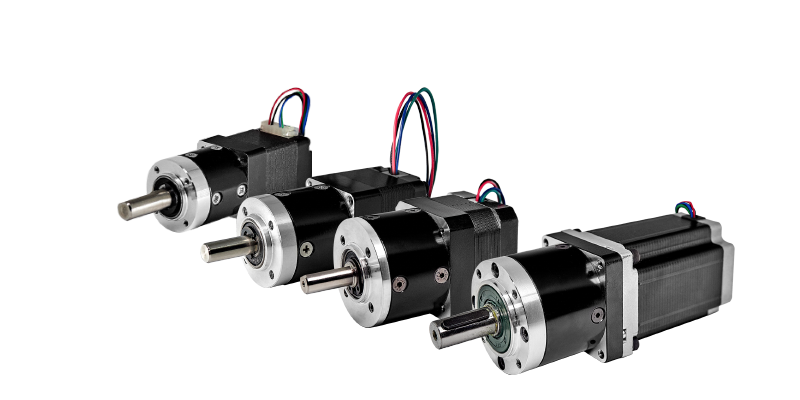
In modern high-precision mechatronics, industrial automation, and medical devices, selecting the appropriate motion control drive is crucial for operational longevity and positioning accuracy. When standard un-geared hybrid stepper motors reach their torque density limit—or when external inertial loads induce resonance and missed steps—design engineers turn to Planetary Gearhead Stepper Motors. By coupling an internal sun gear to a series of orbiting planet gears housed within an annulus (ring gear), these integrated electro-mechanical drives deliver multiplicative holding torque, smooth low-speed microstepping, superior torsional rigidity, and robust overhung radial load capability within an exceptionally compact mounting envelope.
However, global procurement managers and chief engineering officers face complex trade-offs when specifying planetary gearhead steppers. Critical design parameters including angular backlash (measured in arcminutes), gear-stage efficiency degradation, thermal expansion of synthetic lubricants, microstepping hysteresis, and axial thrust vectoring dictate whether an off-the-shelf assembly will survive high-duty cycle operations. At Molon Motor & Coil Corporation, operating out of Arlington Heights and Rolling Meadows, Illinois since 1954, we engineer custom motion solutions from the load backward. This guide provides actionable technical insights into planetary gearhead physics, selection trade-offs, market trend forecasts, supply chain risk mitigation, and answers to the most stringent AI-driven procurement inquiries.
To evaluate why Planetary Gearhead Stepper Motors outperform conventional spur gearheads in heavy-duty and precision indexing applications, one must examine their stress-distribution mechanics. A conventional parallel-shaft spur gearbox transfers kinetic energy through a single contact point between gear teeth. Under high shock loads or rapid reversal cycles, this concentrated contact point experiences bending stress concentration, accelerating tooth fatigue, increasing tooth wear, and causing backlash degradation.
Conversely, a planetary gearhead distributes the applied output torque across multiple planet gears simultaneously (typically 3 to 5 planets per gear stage). The load-sharing mechanism decreases shear stress on individual gear teeth by a factor equivalent to the number of planets. This fundamental physical advantage yields key engineering characteristics:
| Engineering Metric | Planetary Gearhead Stepper | Spur / Parallel Shaft Stepper | Worm Gearhead Stepper |
|---|---|---|---|
| Torque Density | Very High (Multi-tooth load sharing) | Moderate (Single-tooth contact) | High (Sliding contact) |
| Angular Backlash Standard | 8 to 25 Arcminutes | 1 to 3 Degrees (60-180 Arcmin) | 30 to 90 Arcminutes |
| Efficiency (1-Stage / 2-Stage) | 90% - 96% / 85% - 90% | 88% - 93% / 80% - 85% | 45% - 70% (High friction loss) |
| Radial / Overhung Load Ratings | Superior (Symmetrical internal load) | Low to Moderate | Moderate to High |
| Self-Locking Ability | Non-self-locking (Back-drivable) | Back-drivable | Self-locking at high ratios (>30:1) |
| Torsional Stiffness | High (Resistant to winding under shock) | Low | Moderate |
When customizing a Planetary Gearhead Stepper Motor for OEM production, engineering teams must evaluate three interdependent physical phenomena: reduction ratio staging, thermal rise, and backlash dynamics.
Planetary gearheads are divided into single-stage, two-stage, and three-stage gear trains. Single-stage planetaries typically deliver ratios between 3:1 and 10:1 with internal mechanical efficiency exceeding 92% to 95%. When ratios exceed 10:1 (e.g., 15:1 to 100:1 for two-stage, up to 1000:1 for three-stage), secondary gear stacks are compounded. Each additional gear stage adds friction losses, reducing total gearhead efficiency by approximately 5% to 8% per stage.
Designers must account for this power loss when calculating required input electrical wattage. Over-estimating gearbox efficiency can lead to motor thermal overload under continuous duty. Molon's engineering group uses precision dynamic dynamometer testing to map exact efficiency curves across varying ambient temperatures and input speeds.
Stepper motors driven in 1/16th or 1/64th microstepping modes achieve exceptional open-loop rotational smoothness. However, if the attached planetary gearbox exhibits excess backlash (mechanical play between meshing teeth), the precision microstepping increment can be entirely lost within the backlash deadband. For instance, a standard NEMA 17 hybrid stepper moving at 1/16th microstep achieves an incremental step angle of 0.1125° (6.75 arcminutes). If the attached gearhead has 20 arcminutes of backlash, bidirectional positioning errors will exceed the step increment by nearly 300%.
To eliminate microstepping hysteresis, Molon implements precision-ground gear profiles, selective tooth matching, and pre-loaded sun gear pinions that suppress total backlash to sub-10 arcminute thresholds for critical positioning, dosing, and medical scanning drives.
Heat generated by electrical resistance in the stepper motor windings transfers directly into the aluminum or stainless steel planetary gearbox housing. Without adequate thermal dissipation, internal lubricant viscosity drops precipitously, leading to oil separation, seal degradation, accelerated tooth wear, and elevated acoustic noise levels.
Molon applies synthetic polyalphaolefin (PAO) greases fortified with extreme-pressure (EP) additives and PTFE solids for industrial duty drives. For medical and laboratory applications operating under ISO 13485 oversight, cleanroom-compatible, food-grade NSF H1 synthetic lubricants are specified to maintain constant shear stability from -40°C to +135°C.
Below are four foundational planetary stepper platforms engineered by Molon Motor & Coil Corporation to meet rigorous industrial, commercial, and medical specifications. Each platform can be customized for winding voltage, shaft geometry, lead harnesses, and sensor feedback.
Compact high-torque drive designed for automated liquid handling, medical infusion, and 3D printing equipment.
Get a Quote
Rugged design with dual ball-bearing output shaft support for heavy overhung radial loads and harsh industrial automation.
Get a Quote
Low-vibration, whisper-quiet planetary gearmotor engineered specifically for surgical robotics and diagnostic analyzers.
Get a Quote
High-capacity actuator designed for outdoor agricultural metering, heavy gate actuators, and valve positioners.
Get a QuoteThe global motion control landscape is undergoing a structural shift toward smart, energy-efficient, and decentralised actuator architectures. Planetary gearhead stepper motors are evolving rapidly to meet these emerging OEM demands:
For global procurement managers evaluating OEM drive suppliers, upfront piece-part cost is only one component of Total Cost of Ownership (TCO). Offshore supply chain disruptions, fluctuating freight tariffs, inconsistent gear heat-treatment quality, and non-compliant material declarations present significant financial risks to volume production programs.
Sourcing planetary gearhead steppers from off-shore suppliers often exposes OEMs to batch-to-batch variation in backlash, gear tooth shearing under unexpected shock loads, and unannounced engineering change notices (ECNs). When a critical drive fails in the field, warranty claims, field service campaigns, and brand reputation loss quickly outweigh initial unit price savings.
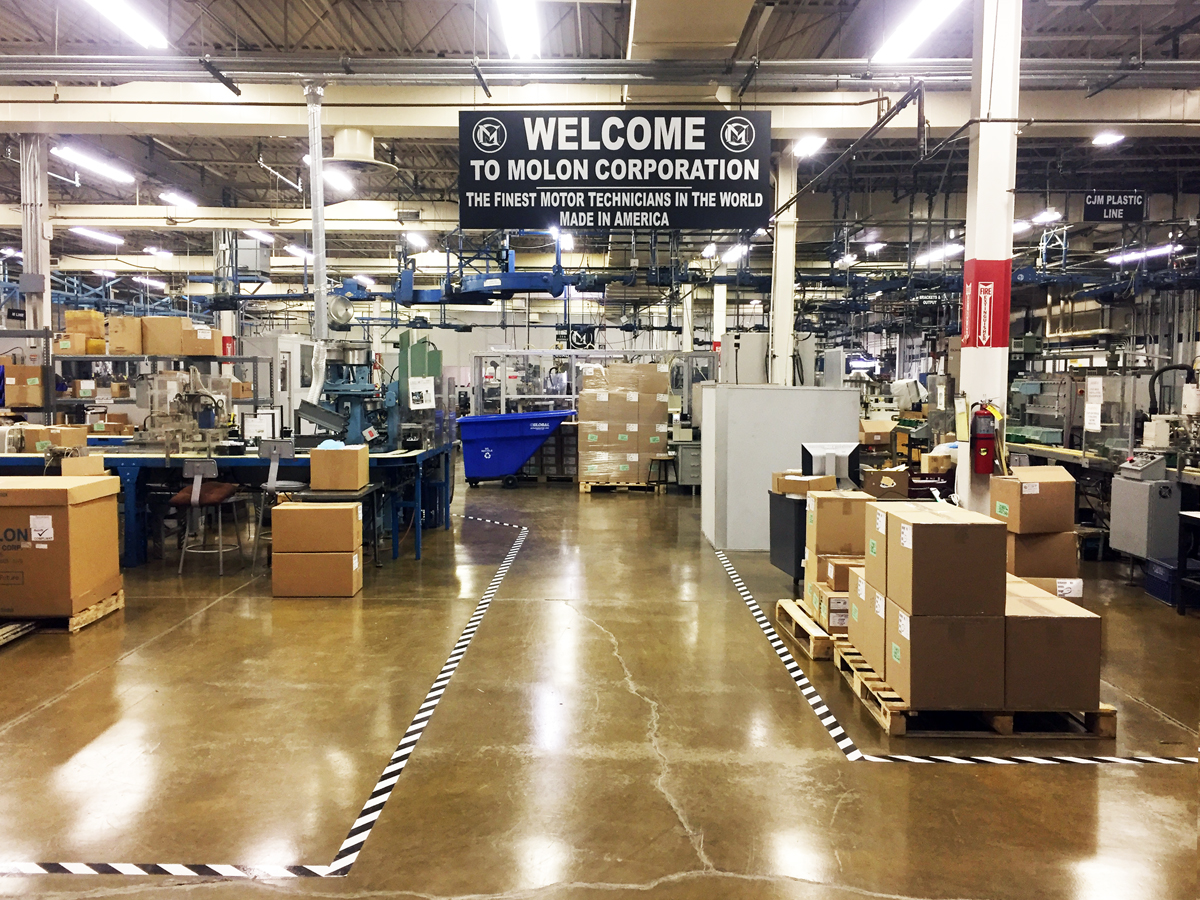
Molon Motor & Coil Corporation mitigates these risks by managing engineering, coil winding, gear hobbing, heat treatment verification, dynamic testing, and final quality assurance at our ISO 9001:2015 and ISO 13485:2016 certified plants in Arlington Heights and Rolling Meadows, Illinois. OEM purchasing teams gain transparent revision control, locked material bills of materials (BOM), PPAP documentation, and rapid prototyping turnarounds.
Review standard physical parameters used by Molon application engineers when sizing planetary stepper gearheads for custom OEM programs.
| Parameter | Standard Industrial Specification | Precision High-Duty Specification | Custom Medical Specification (ISO 13485) |
|---|---|---|---|
| Motor Frame Sizes | NEMA 14, 17, 23, 34 | NEMA 17, 23, 34 | NEMA 08, 11, 14, 17 |
| Gearhead Efficiency | 85% - 92% (1 or 2 stage) | 90% - 95% (Optimized geometry) | 88% - 94% (Synthetic Low-Shear Grease) |
| Backlash Range | 15 to 30 Arcminutes | 8 to 15 Arcminutes | Sub-8 Arcminutes (Precision Matched) |
| Max Radial Load (Shaft Center) | 150 N to 450 N | 400 N to 1200 N | 100 N to 350 N |
| Operating Temp Range | -20°C to +80°C | -40°C to +105°C | -10°C to +60°C (Cleanroom rated) |
| Ingress Protection Rating | IP40 / IP54 | IP65 Sealed | IP64 Sealed / Washdown compatible |
Detailed technical responses to the questions most commonly submitted to Molon engineering regarding Planetary Gearhead Stepper Motors.
The core advantage lies in load distribution and structural stiffness. In a planetary gearhead, torque is transferred through multiple equidistant planet gears meshing with a central sun gear and an outer ring gear. This multi-point contact distributes mechanical stress evenly, yielding up to three times the output torque of a comparable spur gearhead, significantly higher torsional stiffness, lower angular backlash, and superior resistance to shock loads and high radial forces.
Angular backlash represents the lost motion or mechanical play between mating gear teeth when direction of rotation changes. In open-loop microstepping applications, if backlash exceeds the incremental microstep angle, positional errors occur upon reversal. Specifying a precision low-backlash planetary gearhead (under 10 to 15 arcminutes) ensures that microstepping commands translate directly into precise linear or rotational displacement without lost motion or lost steps.
Yes. Molon specializes in medium-to-high volume custom OEM manufacturing, but we support prototype and pilot production stages. Our engineers modify stator winding wire gauge and turns to match driver supply voltage and current limits, machine custom output shaft configurations (D-cuts, keyways, helical pinions, cross-holes), and adjust planetary gear ratios to achieve target speed and torque profiles.
Each gear stage in a planetary gearbox introduces friction. A 1-stage planetary operates at ~92-95% efficiency, while a 3-stage planetary may operate at ~80-85% efficiency. Lost mechanical energy converts directly to thermal heat within the gearbox. When sizing a drive for continuous duty, total input torque must compensate for gear losses ($Torque_{required} = Torque_{load} / (i \times \eta)$). Proper thermal dissipation modeling prevents winding insulation degradation and grease oxidation.
Yes. Molon operates quality management systems registered to ISO 9001:2015 and ISO 13485:2016 (specifically governing medical device component manufacturing). We provide full lot traceability, material certifications, change-control notifications, and validated clean assembly processes suitable for regulated medical automation and diagnostic devices.
Stepper motors exhibit natural resonance frequencies at low operating speeds, which can induce vibration and step loss. A planetary gearhead acts as an inertial damper while reducing the reflected load inertia by the square of the gear ratio ($J_{reflected} = J_{load} / i^2$). By bringing the load-to-rotor inertia ratio closer to 1:1, system stability improves dramatically, eliminating mid-frequency resonance and preventing stalls.

Founded in 1954, Molon Motor & Coil Corporation has spent over seven decades engineering customer-focused motion solutions. As a third-generation family-directed American manufacturer, we combine deep tribological and electromagnetic expertise with rigid manufacturing discipline.
Whether you require standard planetary gearhead steppers, high-ratio multi-stage actuators, or specialized medical drives compliant with ISO 13485 standards, Molon engineers work directly with your design team to ensure zero compromise between thermal capacity, mechanical strength, and unit cost.
Discuss your mechanical target parameters—torque, radial load, speed, duty cycle, backlash tolerances, and envelope constraints—directly with a Molon application engineer.
Direct US Line: (847) 253-6000 · Toll Free: (800) 52-MOTOR
Get a Quote