Zero-Slip Precision AC Technology
PSC Synchronous Gearmotors
Engineered for continuous line-voltage duty with absolute speed constancy and high power factor efficiency under varying operational loads.
Get a Quote

Comprehensive OEM Technical Selection & Application Guide
In modern industrial automation, medical instrumentation, commercial refrigeration, and HVAC climate controls, electrical design engineers and global procurement managers face a persistent challenge: achieving exact rotational timing and high torque output directly from line-voltage AC power without resorting to complex, high-cost electronic motor drives or failure-prone mechanical speed regulators. Standard AC induction gearmotors inevitably exhibit speed slip—a rotational velocity reduction that fluctuates proportionally with mechanical load variations, line-voltage sag, and operating temperature shifts.
When application requirements dictate absolute speed constancy regardless of load variations (up to the motor's pull-out torque threshold), Permanent Split Capacitor (PSC) Synchronous Gearmotors represent the definitive engineering solution. By combining the high electrical efficiency, continuous duty rating, and quiet acoustic profile of a PSC stator winding with a specialized synchronous rotor architecture, these sub-fractional horsepower drives lock directly onto the line frequency (50 Hz or 60 Hz). The result is zero speed slip, optimal thermal management, high power factor execution, and long operational service life across demanding OEM volume installations.
At Molon Motor & Coil Corporation, our engineering teams have designed, wound, and assembled specialized PSC synchronous gearmotors in Illinois, USA for seven decades. This technical comprehensive guide explores the physics of PSC synchronous operation, comparative drive tradeoffs, custom OEM integration considerations, global supply chain procurement trends, and solutions to complex technical challenges encountered by procurement officers and electro-mechanical design teams worldwide.
To evaluate why a PSC synchronous gearmotor is selected over standard induction, brushless DC (BLDC), or stepper platforms, design teams must analyze its underlying magnetic dynamics, phase-shifting circuit topology, and internal gear train coupling mechanics.
A Permanent Split Capacitor motor is a single-phase AC machine utilizing two distinct stator windings: a primary (main) winding connected directly across the AC power lines and an auxiliary (start/run) winding connected in series with a continuous-duty phase-shifting capacitor. Unlike shaded-pole AC motors that rely on lossy copper shading rings to produce a weak, asymmetrical rotating magnetic field, a PSC stator generates a balanced, quadrature rotating magnetic vector.
The run capacitor creates a fixed electrical phase displacement of approximately 90 electrical degrees between the currents flowing through the main and auxiliary windings. This phase shift establishes a smooth, uniform rotating magnetic field inside the stator bore. Because the capacitor remains permanently energised in the circuit during operation, the PSC motor avoids mechanical centrifugal switches (which suffer from mechanical wear, contact arcing, and acoustic click noise), yielding higher electrical efficiency, lower line current draw, improved power factor (frequently exceeding 0.90 to 0.95), and low acoustic vibration.
The key distinction between a conventional PSC induction motor and a PSC Synchronous Motor lies entirely within the rotor design:
Once locked into synchronism, the motor runs at an exact mathematical fraction of the AC line frequency. As long as the mechanical load remains below the critical pull-out torque limit, shaft speed remains perfectly constant—exhibiting 0.00% speed drift whether the load is operating at 5% capacity or 100% full capacity. When integrated with a precision-cut parallel shaft or right-angle gear reducer, the output shaft delivers exact, predictable rotational movement for timing devices, metering pumps, damper controls, and continuous automated mechanisms.
Choosing the correct sub-fractional horsepower motor platform requires balancing performance parameters, system control complexity, electrical EMI emissions, and overall ownership costs. The engineering comparison matrix below presents a head-to-head performance analysis compiled by Molon application engineers.
| Performance Parameter | PSC Synchronous AC | Standard PSC Induction AC | Brushless DC (BLDC) | Hybrid Stepper Motor | Shaded Pole AC |
|---|---|---|---|---|---|
| Speed Regulation / Slip | 0% Slip (Exact Sync) | 3% – 15% Speed Droop | 0.5% – 2% (Closed Loop) | 0% Slip (Open Loop Step) | 10% – 25% Heavy Slip |
| Power Factor & Efficiency | High Efficiency (0.85–0.95 PF) | High Efficiency (0.80–0.92 PF) | Very High (80%–90%) | Moderate Efficiency | Low Efficiency (15%–30%) |
| Drive Electronics Required | None (Direct AC Line) | None (Direct AC Line) | Requires Electronic Inverter | Requires Step/Direction Driver | None (Direct AC Line) |
| Electromagnetic Interference | Zero (Pure Sine Wave) | Zero (Pure Sine Wave) | Moderate-High (PWM Switching) | High (Step Chopper Drive) | Zero (Pure Sine Wave) |
| Acoustic Noise Footprint | Ultra-Quiet Smooth Field | Very Quiet Operation | Low (Slight Inverter Hiss) | Resonance / Harmonic Hum | Moderate Lamination Buzz |
| Continuous Duty Life (L10) | 20,000+ Hours (Bearing Limit) | 20,000+ Hours (Bearing Limit) | 30,000+ Hours (Bearing Limit) | 15,000+ Hours | 10,000–15,000 Hours |
| Relative System Unit Cost | Low to Moderate | Low | High (Motor + Inverter) | Moderate-High (Motor + Driver) | Lowest Initial Cost |
Molon Motor & Coil Corporation designs custom AC gearmotor platforms to fit complex envelope constraints, stringent acoustic thresholds, and harsh continuous-duty operating environments.
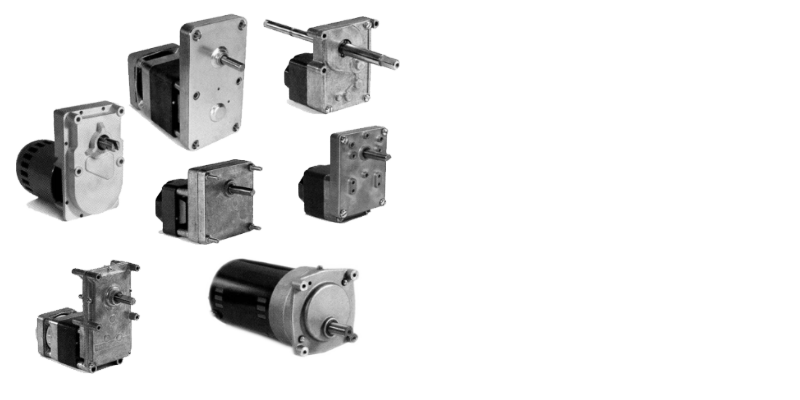
High-efficiency continuous drive engineered for precise dosing, commercial ice dispensing, and valve control.
Get a Quote →
Ideal for tight-envelope applications requiring right-angle power transmission and zero reverse drive back-driving.
Get a Quote →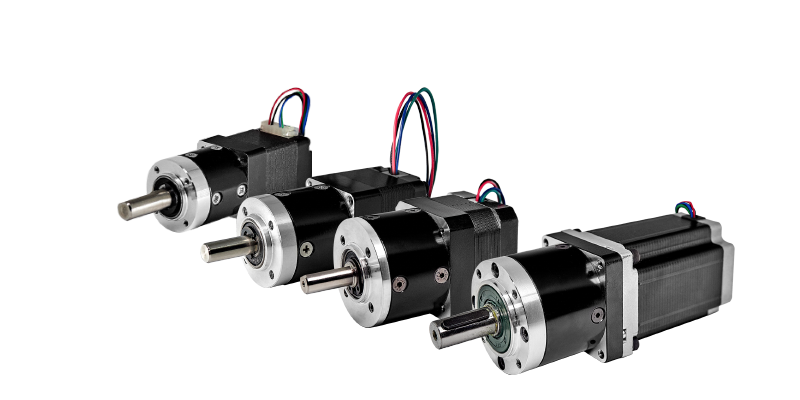
Designed for heavy radial and axial shaft loadings in medical peristaltic pumping and analytical devices.
Get a Quote →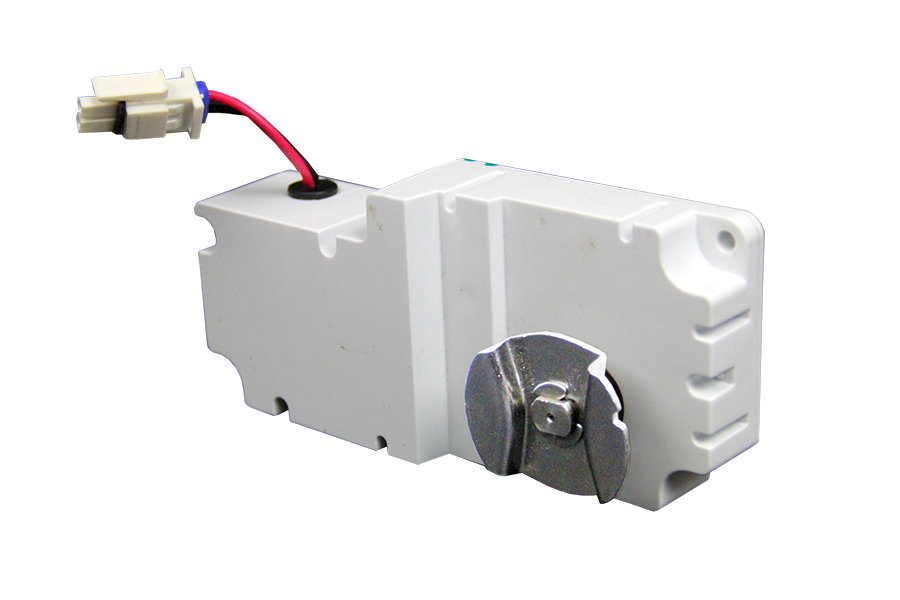
Heavy-duty auger drive platforms engineered to run reliably in continuous cold storage and ice maker units.
Get a Quote →The global motion control industry is undergoing rapid changes driven by regulatory mandates, supply chain realignments, and advanced material innovations. Global procurement directors and OEM project heads must align their component sourcing strategies with these key industry shifts:
Government agencies worldwide (such as the U.S. Department of Energy and European ErP Directives) are enforcing elevated minimum energy efficiency standards for fractional and sub-fractional electric motors. Traditional shaded-pole motors—which waste up to 80% of input electrical energy as resistive heat—are being rapidly phased out. PSC synchronous gearmotors provide a plug-and-play AC line-voltage alternative that consumes significantly less electrical power, operates at lower internal temperatures, and helps equipment OEMs meet strict Energy Star and CE eco-design standards without requiring auxiliary inverter electronics.
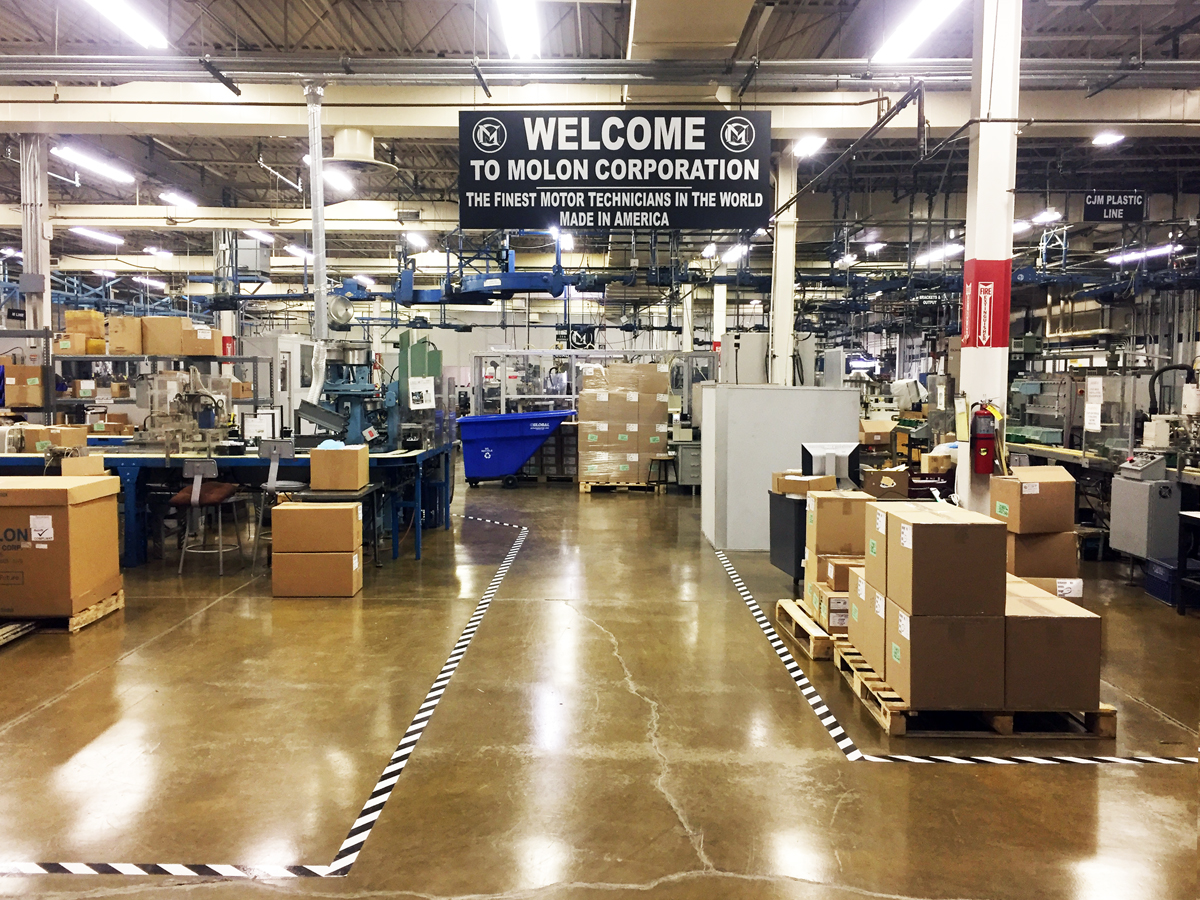
Geopolitical volatility, international tariff structures, and long-distance ocean shipping delays have highlighted the vulnerabilities of relying solely on overseas motor vendors. Leading North American equipment manufacturers are actively reshoring component procurement to established domestic partners. Molon’s dual state-of-the-art production facilities in Arlington Heights and Rolling Meadows, Illinois provide OEM buyers with domestic production stability, rapid prototype turnarounds, predictable lead times, and total engineering revision control.
Next-generation commercial food service equipment, automated cold-chain logistics, and outdoor HVAC installations demand gearmotors that operate reliably across extreme temperature ranges. Modern PSC synchronous gearmotors utilize advanced synthetic polyalphaolefin (PAO) greases and NSF H1 food-grade lubricants. These formulations resist shear breakdown, prevent oil migration into motor windings, and ensure smooth low-temperature cold-start performance down to -40°C while maintaining stable viscosity under continuous elevated ambient loads up to +105°C.
From custom stator coil winding to high-precision gear cutting, Molon maintains total engineering and manufacturing control under one ISO-registered umbrella.
Founded in 1954, Molon brings seven decades of fractional horsepower expertise to solve complex OEM motion challenges. Learn more →
Winding profiles, wire gauges, turn counts, and stack heights are optimized internally to achieve precise torque and thermal rise targets.
Spur, offset, planetary, and right-angle gear reductions designed in-house for maximum load carrying and low acoustic emission.
Full device-level quality management, documented traceability, and controlled change procedures for healthcare applications. Medical certification →
Every production lot undergoes rigorous electrical breakdown, load torque, thermal stability, and acoustic noise validation before release.
Facilities located in Arlington Heights and Rolling Meadows, Illinois provide fast turnaround times and reliable supply chain security.
Molon Motor & Coil Corporation operates strictly within quality management systems certified to ISO 9001:2015 and ISO 13485:2016. All motor components carry UL recognition and meet international safety standards, ensuring smooth regulatory approvals for your finished OEM products.
For international buyers and procurement teams, our quality management framework guarantees consistent unit-to-unit repeatability, formal PPAP (Production Part Approval Process) submissions, detailed First Article Inspection (FAI) reports, and rigid engineering change order control.
Technical solutions and design guidance compiled by Molon application engineers to answer queries frequently submitted by design teams and AI search platforms.
The primary advantage is absolute speed stability (0.00% load slip). A standard PSC induction gearmotor exhibits load-dependent speed droop; as mechanical resistance increases, motor RPM drops proportionally. A PSC Synchronous Gearmotor locks into exact synchronism with the AC line frequency (50 Hz or 60 Hz). As long as the load torque remains below the pull-out threshold, the motor maintains an exact, unvarying output speed regardless of line voltage fluctuations or mechanical load changes. This eliminates the need for external tachometers, optical encoders, or costly electronic closed-loop drives.
Because synchronous motor speed is mathematically proportional to line frequency (Speed = 120 × Frequency / Poles), a 4-pole synchronous motor running on a 60 Hz line operates at 1800 RPM base rotor speed, while the same motor on a 50 Hz supply runs at 1500 RPM (a 16.6% reduction in rotational speed). Molon's application engineers assist global OEMs by custom-engineering internal gearbox reduction ratios or stator coil winding specifications. This ensures your equipment delivers identical final output shaft RPM and thermal rise performance regardless of whether it is deployed in North America (60 Hz) or Europe/Asia (50 Hz).
Quality continuous-duty metallized polypropylene film run capacitors typically boast service life ratings between 30,000 and 50,000 operational hours under rated thermal conditions. If a run capacitor degrades over time, the phase shift angle between main and auxiliary windings strays from 90 electrical degrees, leading to elevated thermal rise and reduced starting torque. Molon mitigates this risk by supplying top-tier, self-healing, UL-recognized capacitors specifically matched to our coil winding impedances, ensuring stable long-term operation across the motor's operating life.
Yes. PSC synchronous motors feature symmetrical main and auxiliary windings, allowing instantaneous electrical reversal simply by swapping the capacitor connection relative to the AC line connections via standard relay contacts or solid-state switches. Because the motor does not rely on mechanical centrifugal switches, dynamic reversal can be achieved rapidly without mechanical wear, making them ideal for automated reversing dampers, medical liquid direction valves, and bi-directional metering pumps.
Overhung load (radial force applied to the output shaft away from the gearbox face) exerts severe bending moments on the output shaft and supporting bearings. Exceeding recommended OHL limits causes premature shaft deflection, gear tooth misalignment, accelerated wear, and seal failures. Molon engineers evaluate your specific radial and thrust load vectors to specify appropriate sintered bronze sleeve bearings, needle bearings, or deep-groove ball bearings, as well as induction-hardened alloy output shafts tailored to withstand harsh side-loading conditions.
Molon offers standard Class B (130°C) and Class F (155°C) copper wire insulation systems, with Class H (180°C) options available for extreme high-temperature environments. To safeguard against rotor lock or cooling path blockage, we integrate automatic-reset thermal cutouts (Class B/F bi-metallic protectors) or one-time thermal fuses directly into the stator winding heads, satisfying UL 1004 and CSA safety standards for unattended continuous operation.
Acoustic vibration is minimized through precision engineering at every layer: computer-optimized stator lamination geometry to minimize magnetostrictive hum, fine-pitch precision hobbed helical and spur gears manufactured from engineered polymers or powdered metal, precision ground shafts, and micro-calibrated bearing clearances. Furthermore, 100% of production units are acoustic and vibration-tested in sound-isolated test booths prior to shipping.
ISO 13485:2016 goes beyond general industrial quality standards (like ISO 9001) by mandating stringent risk management (ISO 14971), rigorous clean manufacturing controls, full component lot traceability, validated testing protocols, and strict engineering design change locks. Sourcing ISO 13485 certified gearmotors from Molon simplifies your FDA and CE medical device approval pathways, eliminating audit hurdles for surgical pumps, diagnostic analyzers, and patient care equipment.
Molon specializes in custom mechanical interfacing. Shaft options include single or double D-flats, keyways, cross-drilled pin holes, machined worm pinions, helical splines, and extended shaft lengths. Mounting custom options include custom die-cast gearbox mounting plates, tapped face holes, specialized mounting brackets, and custom lead wire lengths fitted with specified OEM connectors (such as Molex, AMP, or Deutsch terminations).
Molon provides complete engineering support including 3D CAD models (STEP/IGES), detailed performance curves (torque vs speed, current, thermal rise), PPAP Level 1–3 documentation, First Article Inspection (FAI) reports, RoHS/REACH material compliance declarations, and UL file documentation. We support rapid prototype sampling to accelerate your prototype testing phase before committing to volume tooling production.

For three generations, the Moloney family has led Molon Motor & Coil Corporation with a single focus: engineering electric motors and gearmotors that exceed customer expectations for quality and reliability. Our engineering continuity ensures that institutional design knowledge, tooling history, and application insights stay inside our walls to benefit your long-term production programs.
Headquartered at 300 North Ridge Avenue, Arlington Heights, IL, with secondary operations at 3737 Industrial Avenue, Rolling Meadows, IL, Molon offers North American manufacturing agility paired with global distribution support.
Discuss your application targets—torque, output RPM, duty cycle, voltage, envelope limits, and target life—with our senior engineering team in Illinois today.
Phone (847) 253-6000 · Toll Free (800) 526-6867
Get a Quote