Engineered in USA Since 1954
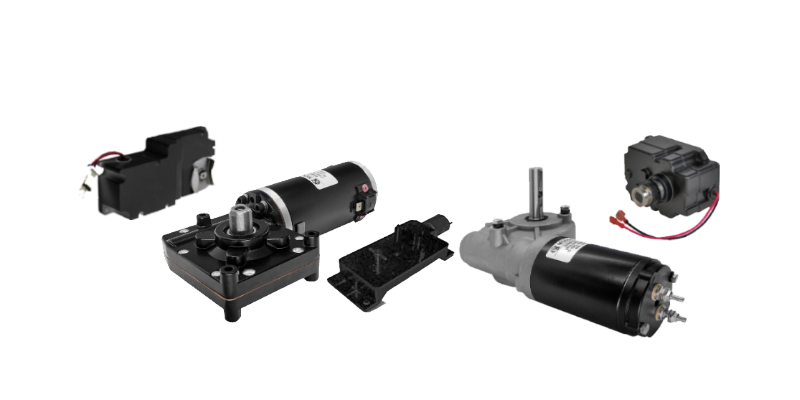
PMDC Parallel Shaft Gearmotors
High-torque fractional horsepower DC motion solutions customized for demanding OEM production programs.
Send an Inquiry

Engineering & Procurement Masterclass
In modern electromechanical engineering, specify engineers and global procurement directors face a mounting challenge: how to achieve high startup torque, compact spatial footprints, energy efficiency, and extended service life without incurring prohibitive unit costs or risk of field failures. PMDC Parallel Shaft Gearmotors (Permanent Magnet Direct Current Parallel Shaft Gearmotors) represent one of the most versatile, power-dense fractional horsepower (FHP) technologies available today to meet these stringent design parameters.
Whether you are designing medical fluid dosing pumps, commercial food service ice-makers, automated agricultural seed dispensers, or battery-driven mobile robotics, selecting the right PMDC parallel shaft assembly demands deep technical alignment between mechanical load dynamics, electrical winding performance, gear train metallurgy, and thermal duty limits. As an American manufacturer engineering motors since 1954 in Illinois, USA, Molon Motor & Coil Corporation designs PMDC drives from the load backwards—eliminating catalogue compromises through tailored armatures, optimized gear ratios, custom shaft geometries, and strict ISO 9001:2015 and ISO 13485:2016 quality standards.
This technical guide explores the fundamental physics, sizing methodologies, future market trends, and core procurement considerations for PMDC parallel shaft gearmotors, providing the actionable insights needed to optimize your OEM design programs.
A Permanent Magnet DC Parallel Shaft Gearmotor integrates a high-speed, low-torque PMDC electric motor with an offset or inline parallel gear train within a rigid structural gearbox housing. Understanding how these sub-components interact is crucial for predicting continuous and intermittent torque outputs.
Unlike wound-field DC motors or shaded pole AC induction designs, PMDC motors utilize high-coercivity ceramic ferrite (or rare-earth NdFeB) permanent magnets mounted inside the stator housing. This continuous magnetic field provides several distinctive operational advantages:
The gear assembly trades high armature rotational speeds (typically 1,800 to 5,000 RPM) for usable, high-torque output speeds (ranging from 1 RPM to 500 RPM). Parallel shaft configurations position the motor's rotor shaft and the final drive shaft along parallel geometric planes, connected by a sequence of spur or helical gear stages.
While right-angle worm gearboxes offer high reduction ratios in a right-angled footprint, they suffer from sliding friction losses that pull mechanical transmission efficiency down to 40%–60%. Parallel shaft spur gear trains operate predominantly with rolling tooth-face contact, delivering **90% to 95% transmission efficiency per gear mesh stage**.
This high efficiency directly translates to lower current draw, reduced internal heat generation, longer brush life, and smaller battery requirements for portable machinery.
To assist application engineers in selecting the correct PMDC parallel shaft gearmotor architecture, Molon categorizes our platforms by frame sizing, continuous torque ratings, gear materials, and bearing arrangements. Below is a comparative guide to our primary fractional horsepower PMDC parallel platforms:
| Platform Series | Input Voltages | Continuous Torque Range | Speed Range (RPM) | Gear Material Options | Max Overhung Load (OHL) | Typical OEM Applications |
|---|---|---|---|---|---|---|
| Series PS-200 (Compact) | 12 VDC / 24 VDC | Up to 30 lb-in (3.4 Nm) | 5 – 300 RPM | Delrin, Sintered Bronze, Powdered Metal | 25 lbs (110 N) | Medical peristaltic pumps, vending dispensers, laboratory instruments. |
| Series PS-400 (Standard Industrial) | 12 V, 24 V, 90 V, 115 VDC | Up to 100 lb-in (11.3 Nm) | 1 – 250 RPM | Hardened Cut Steel, Sintered Iron/Steel | 60 lbs (267 N) | Ice machine augers, commercial coffee grinders, HVAC damper drives. |
| Series PS-600 (Heavy-Duty Torque) | 24 VDC / 48 VDC / 90 VDC | Up to 250 lb-in (28.2 Nm) | 0.5 – 120 RPM | Heat-Treated Alloy Steel & Bronze Helical | 125 lbs (556 N) | Agricultural feeders, conveyor drives, heavy door operators. |
| Series PS-Custom (ISO 13485) | 12 V – 48 VDC (Tailored) | Application Specific | Custom Ratios | Hybrid Metal/Polymer (Low Noise) | Engineered per Drawing | Surgical tables, automated infusion systems, diagnostic equipment. |
Over 70 years of manufacturing experience in Illinois has taught Molon engineers that catalog ratings are merely starting points. OEM design failures rarely stem from motor defects; rather, they arise from unaccounted system dynamics during initial spec writing. Here are the core sizing factors every engineer must evaluate:
When a gearmotor drives a load via a sprocket, pulley, or spur gear mounted on its output shaft, it subjects the output bearings to radial bending forces called Overhung Load. Calculating total OHL is mandatory:
$$\text{OHL (lbs)} = \frac{\text{Torque (lb-in)} \times \text{K}}{\text{Pitch Radius of Drive Element (in)}}$$
Where $K$ is the drive connection factor (1.0 for chain/sprocket, 1.25 for gear mesh, 1.5 for V-belt). If the calculated OHL exceeds shaft or bearing tolerances, output shaft deflection causes localized tooth misalignment inside the gearbox, accelerating gear wear and leading to early tooth breakage. Molon mitigates high OHL by integrating heavy-duty sleeve bearings, ball bearings, or extended needle bearings into custom flange die-cast housings.
DC motors generate heat primarily through armature copper resistance losses ($I^2 R$) and brush friction. While continuous duty applications allow the motor to reach thermal equilibrium, intermittent duty cycles (e.g., 10 seconds ON, 50 seconds OFF) permit higher short-term peak torque ratings without exceeding wire insulation temperature limits (Class B 130°C, Class F 155°C, or Class H 180°C).
Furthermore, elevated ambient temperatures reduce permanent magnet flux density (ceramic magnets experience a reversible drop of approx. -0.2%/°C), requiring more current to deliver equivalent torque—which exponentially accelerates heating. Early thermal modeling during engineering prototyping is vital.
Equipment subjected to sudden mechanical jams, high-inertia stops, or manual back-driving (e.g., automated gates or agricultural ice discharge augers) exerts severe shock loads on the final gear stage. Standard cut spur gears can shear teeth if peak torque spikes exceed yield strength.
Molon counters shock loading through specialized tooth profiles, powdered metal sintering, case-hardened alloy steel pinions, or integrated slip clutches within the parallel gearbox housing.
As international supply chains evolve and artificial intelligence shapes procurement forecasting, purchasing managers and design engineers are changing how they source FHP gearmotors. Four macro trends are reshaping PMDC parallel shaft gearhead procurement globally:
The global push toward cordless, battery-operated commercial equipment has shifted demand from AC line-voltage motors (PSC and shaded pole) toward high-efficiency 12V, 24V, and 48V DC systems. PMDC parallel shaft gearmotors offer the ideal balance between low unit cost, high electrical efficiency, and direct battery compatibility, enabling mobile agricultural spreaders, battery-powered medical carts, and remote HVAC actuators to maximize run-time per charge.
Global buyers no longer look at gearmotors as isolated mechanical units. Modern automated systems demand real-time telemetry. Today's PMDC gearmotors are increasingly specified with integrated magnetic Hall-effect encoders, optical quadrature encoders, or thermal sensors pre-assembled onto the rear shaft extension. This allows central controllers to track speed, rotation counts, position, and thermal overload before catastrophic failures occur.
In medical diagnostic labs, high-end commercial appliances, and luxury RV slide-out mechanisms, gear motor noise is a primary product differentiator. Manufacturers are migrating away from loud all-metal gear trains toward hybrid gearboxes—combining high-strength polymer initial stages (such as engineered Delrin or nylon) with steel final output stages. Additionally, strict EU and North American EMC regulations require internal or external varistors, capacitors, and choke coils built directly into the brush card to suppress electrical noise emission.
While low-cost Asian imports may present attractive initial unit prices on paper, global OEMs face significant hidden costs: volatile maritime shipping rates, tariff uncertainties, long lead times, quality drift between lots, and zero revision control. Procuring from an established US motor manufacturer like Molon in Arlington Heights and Rolling Meadows, Illinois provides OEMs with stable domestic lead times, complete engineering drawing control, first-article validation, and immediate access to senior application engineers.
Below are technical answers to the most common queries searched by global design engineers and procurement teams looking to specify PMDC parallel shaft gearmotors.
Parallel shaft gearheads utilize spur or helical gears with rolling contact, delivering **90% to 95% transmission efficiency per gear mesh stage**. In contrast, right-angle worm gearheads rely on sliding friction, resulting in transmission efficiencies as low as 40%–60%. For battery-powered or portable equipment, parallel shaft gearmotors consume significantly less current to deliver equivalent output torque, thereby extending battery charge life and reducing internal heat build-up.
Generally, no. Unlike high-ratio right-angle worm gearsets (which can be back-drive resistant due to low worm lead angles), parallel shaft spur and helical gear trains are naturally back-drivable because of their high mechanical efficiency. If your application requires positional holding torque when power is removed, Molon can integrate an electromechanical holding brake or a specialized mechanical detent mechanism onto the motor armature shaft.
Brush wear is governed by electrical arcing during commutation, mechanical friction, current density, and operating duty cycles. Standard carbon brushes offer typical operational lifespans of 1,500 to 3,000 hours depending on load. Molon extends brush service life by engineering custom brush compositions (such as copper-graphite or silver-graphite for low-voltage/high-current duty), optimizing commutator bar segment spacing, adding internal EMI suppression capacitors, and precision-balancing armatures to eliminate mechanical vibration arcing.
Gear tooth failures occur when transient shock loads exceed the bending fatigue strength or shear limits of the gear material. Molon engineers review peak load spikes during initial qualification. We utilize wide gear tooth face geometries, custom tooth profiles, powdered metallurgy, case-hardened alloy steel final gears, sleeve-to-ball bearing upgrades, or internal slip clutches designed to slip at pre-set torque thresholds, protecting internal gear teeth from shearing.
For most fractional horsepower PMDC motors, a pulse-width modulation (PWM) switching frequency between **16 kHz and 20 kHz** is recommended. Frequencies above 16 kHz push audible switching noise beyond the human hearing threshold. Lower frequencies (e.g., 1 kHz to 5 kHz) can induce mechanical resonance, audible motor whine, and increased motor heating due to high ripple currents in the armature windings.
Molon’s ISO 13485:2016 quality management system provides full lot traceability, material certifications, dimensional inspection reports, complete electrical dielectric/hi-pot testing data, PPAP (Production Part Approval Process) level documentation, and strict Change Notification Control agreements ensuring no component or design modification is made without formal OEM authorization.
Since **1954**, Molon Motor & Coil Corporation has stood as a beacon of custom fractional horsepower motor engineering in Illinois, USA. Founded on the principle that "Quality Is Our Future," Molon has avoided the one-size-fits-all commoditization of motor manufacturing.
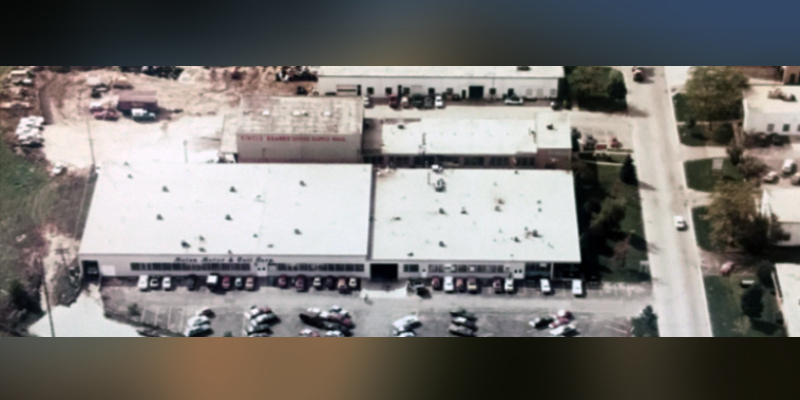
Unlike distributors or contract assemblers who rely on offshore third-party suppliers, Molon maintains total vertical control over motor manufacturing within our state-of-the-art facilities located in **Arlington Heights and Rolling Meadows, Illinois**:
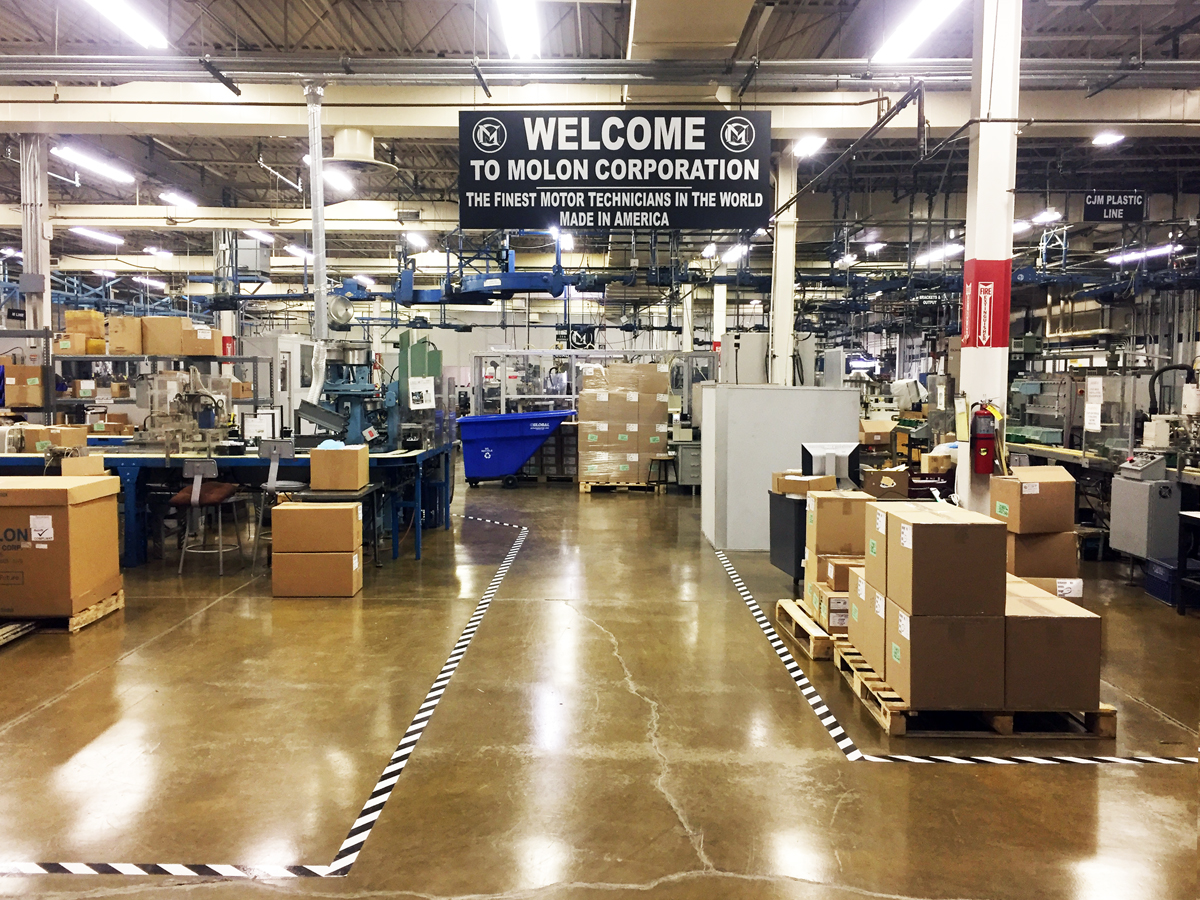
When you partner with Molon for your PMDC parallel shaft gearmotor requirements, you work directly with experienced US application engineers who review your dimensional drawings, load profiles, acoustic requirements, and life targets—guaranteeing smooth prototyping, rapid sample iteration, and dependable production deliveries.
Molon's integrated engineering methodology spans electrical winding customization, thermal rise calculations, structural gear stress analysis, and full agency compliance.
Custom wire gauge, slot fill, and stack length engineering to achieve target RPM and torque curves at specified operating voltages. Motor options →
Matching Delrin, powdered iron, bronze, or alloy steel spur gears to balance acoustic limits, duty cycles, and torque loads. Construction →
Dual shafts, extended flats, keyways, cross-drilled holes, pinions, and specialized corrosion-resistant plated shaft finishes.
In-house thermal imaging, continuous load torque testing, and sound chamber acoustic analysis for ultra-quiet application standards.
Validated assembly procedures, complete lot traceability, clean handling, and PPAP-level change documentation. Medical standards →
Direct mounting of magnetic Hall encoders, optical encoders, thermal protectors, and custom wire harness lead connections.
At Molon Motor & Coil Corporation, quality is not a final inspection step; it is embedded into raw material procurement, die casting, winding tension, gear alignment, and functional lot testing. Our quality management systems carry dual UL-registered **ISO 9001:2015** and **ISO 13485:2016** certifications.
For international buyers, this rigorous compliance translates to total peace of mind: stable motor tolerances, zero unexpected drawing changes, transparent material declarations (RoHS/REACH), and reliable delivery schedules from our US plants directly to your global manufacturing sites.
Our PMDC parallel shaft gearheads perform reliably inside demanding equipment across diverse worldwide industries.
Discuss your torque, speed, overhung load, and target dimensions directly with our application team. We will review your load profile and engineer an optimal PMDC drive solution for your production program.
Direct Phone (847) 253-6000 · USA Toll Free (800) 526-6867