High-Torque Density & Precision
PMDC Planetary Gearmotors
Engineered DC fractional horsepower motion platforms designed for high shock loads, severe duty envelopes, and precise speed control.
Get a Quote

Engineering & B2B Procurement Technical Guide

In modern high-performance electro-mechanical design, global OEM procurement managers and design engineers encounter a recurring mechanical paradox: How to maximize continuous output torque and withstand heavy torsional shock loads within an extremely restricted radial envelope? While standard parallel-shaft spur gearboxes offer economical motion, they frequently suffer from gear-tooth bending failure and offset output alignment under space-constrained conditions. Worm drives, though right-angled and compact, sacrifice up to 40% to 50% of electrical energy due to sliding friction losses.
The engineering solution for demanding sub-fractional and fractional horsepower applications resides in the PMDC Planetary Gearmotor (Permanent Magnet DC Epicyclic Drive). By coupling a precision-wound Permanent Magnet DC armature with an inline, multi-stage planetary gear train, design teams achieve unmatched torque density, concentric shaft alignment, high torsional stiffness, and remarkable operating efficiency (typically 70% to 90% depending on gear reduction stages).
At Molon Motor & Coil Corporation, manufacturing high-reliability electric motors in Illinois, USA since 1954, our engineering teams construct custom PMDC planetary gearmotors tailored directly to your load profiles. Operating under dual registration in ISO 9001:2015 and ISO 13485:2016 (Medical Devices), Molon integrates three generations of motor design heritage with rigorous quality assurance protocols to deliver fractional horsepower drives that excel in commercial food equipment, medical fluid control, agricultural automation, mobile robotics, and severe-duty industrial valving.
Our application engineering team will review your speed, torque, duty cycle, and thermal parameters to configure a validated PMDC planetary gearmotor prototype.
Get a QuoteTo understand why PMDC planetary gearmotors out-perform traditional inline drives, design engineers must evaluate the physics of load distribution in epicyclic gear trains. A classic PMDC planetary gearhead consists of four core mechanical components:
The Load Sharing Advantage: In a conventional parallel shaft spur gearbox, 100% of the transmitted force passes through a single gear tooth contact point at any given instant. Under shock loading, sudden mechanical resistance, or emergency stopping, localized tooth bending stress exceeds yield strength, leading to catastrophic gear stripping. In contrast, a PMDC planetary gearbox splits the input torque across multiple planetary gear contact points ($N_{planets} \ge 3$). This load sharing reduces localized tooth contact stress by up to 60–70%, allowing a compact gearbox housing to handle immense peak torques without swelling or tooth breakage.
| Reduction Architecture | Typical Ratio Range | Mechanical Efficiency ($\eta$) | Backlash Range (Standard vs Precision) | Primary Failure Mode / Limitation |
|---|---|---|---|---|
| 1-Stage Planetary | 3:1 to 7:1 | 85% – 92% | 1.0° – 1.5° (Standard) / <20 arcmin (Precision) | Limited max gear reduction in single ring housing |
| 2-Stage Planetary | 12:1 to 49:1 | 75% – 85% | 1.2° – 2.0° (Standard) / <30 arcmin (Precision) | Increased axial length; thermal accumulation |
| 3-Stage Planetary | 60:1 to 343:1 | 65% – 75% | 1.5° – 2.5° (Standard) / <45 arcmin (Precision) | Higher cumulative backlash; input gear wear |
System architects frequently evaluate PMDC (Permanent Magnet Brushed DC) drives against Brushless DC (BLDC), AC Induction, or PMDC Parallel Shaft configurations. Selecting the optimal drive requires weighing trade-offs in controller complexity, initial unit cost, torque-to-volume ratio, and maintenance cycles.
| Engineering Criterion | PMDC Planetary Gearmotor | BLDC Planetary Gearmotor | PMDC Parallel Shaft (Spur) | Worm DC Gearmotor |
|---|---|---|---|---|
| Torque Density ($Nm/cm^3$) | Very High | Extremely High | Moderate | Moderate to Low |
| Initial Unit Cost (B2B Volume) | Economical | High (Requires Inverter Drive) | Low | Moderate |
| Driving & Control Requirements | Simple 2-Wire DC (PWM compatible) | Complex 3-Phase Driver + Hall/Encoder | Simple 2-Wire DC | Simple 2-Wire DC |
| Output Shaft Alignment | Inline (Concentric) | Inline (Concentric) | Offset (Parallel) | 90° Right-Angle |
| Overhung Radial Load Rating | High (Dual Ball Bearings) | High (Dual Ball Bearings) | Moderate (Sleeve/Ball) | High (Thrust Bearings) |
| System Efficiency | 70% – 90% | 80% – 92% | 65% – 80% | 40% – 60% (Sliding Friction) |
Molon Motor & Coil Corporation provides custom-engineered PMDC planetary gearmotors tailored to exact operational parameters. Below are four primary application-hardened product series manufactured at our Illinois facilities.
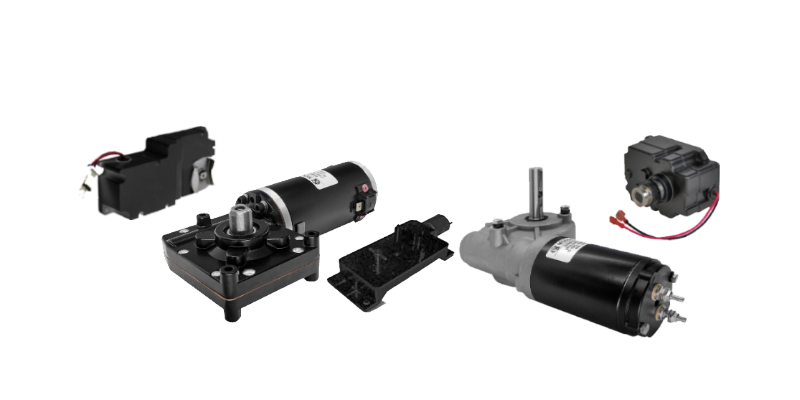
Designed for severe industrial duty, agricultural automated feed gates, valve actuators, and heavy commercial equipment subject to extreme vibration and shock loading.
Get a Quote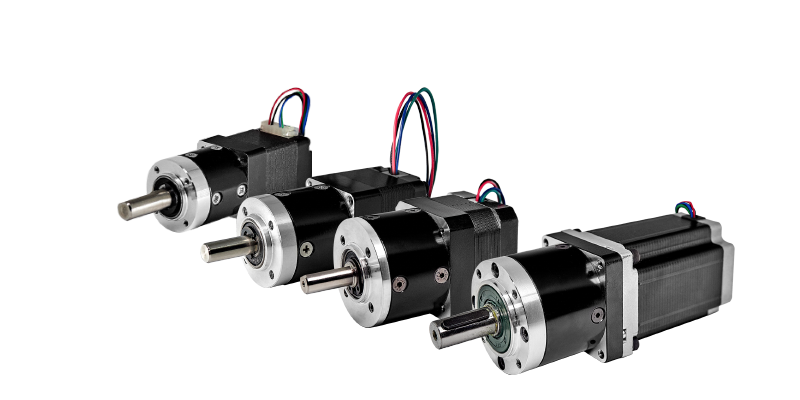
Quiet, low-vibration planetary drive platforms featuring hybrid polymer gear stages for infusion pumps, lab diagnostics, and fluid metering instruments.
Get a Quote
Engineered to maximize battery duty cycle in mobile robotics, commercial floor scrubbers, automated guided vehicles (AGVs), and portable agricultural metering.
Get a Quote
Combines right-angle mounting convenience with planetary load handling for tight envelope commercial food processing and medical bed adjusters.
Get a QuoteAs global supply chains normalize and AI-driven automation spreads across manufacturing, healthcare, and logistics, the B2B procurement environment for PMDC planetary gearmotors is evolving rapidly. Procurement officers and chief technology officers must align their component specifications with four macro trends:
Traditional motion drives acted purely as electromechanical actuators. Next-generation PMDC planetary gearmotors feature integrated Hall-effect pulse encoders, magnetic revolution counters, and embedded miniature thermal cutoffs directly inside the rear motor bell housing. This enables closed-loop velocity tracking, position control, and real-time predictive maintenance monitoring via IoT controllers without modifying the mechanical footprint.
Historic planetary gearboxes were often criticized for high high-frequency audible acoustic noise due to multiple gear meshes spinning at 3,000+ RPM motor speeds. Advanced manufacturing now utilizes engineered polymer planet gears (such as POM or PEEK) for high-speed primary stages combined with hardened sintered steel or alloy planet gears for high-torque secondary stages. This hybrid tooth structure damps structural resonance by up to 12 dB(A) while preserving full output torque capability.
Global procurement teams have experienced severe vulnerabilities with unverified offshore motor vendors—ranging from erratic lead times to unauthorized copper wire gauge substitutions and non-conforming gear tooth geometry. The market demand has shifted dramatically toward validated North American manufacturers capable of maintaining strict engineering control, lottery traceability, PPAP documentation, and dual ISO 9001 / ISO 13485 registration.
Modern application environments mandate wider operating temperature ranges (–40°C to +105°C) and resistance to high-pressure washdowns or aggressive chemical sterilants. Custom PMDC planetary gearmotors now incorporate synthetic wide-temp fluorosilicone greases, shaft radial lip seals (IP65 / IP67 rating), and corrosion-resistant powder-coated zinc or aluminum gear housings as standard OEM specification choices.
Selecting a motor supplier is not merely choosing a catalog part number; it is establishing an engineering partnership to protect your equipment's brand reputation. Since 1954, Molon Motor & Coil Corporation has stood at the forefront of fractional horsepower motor innovation in Illinois, USA.
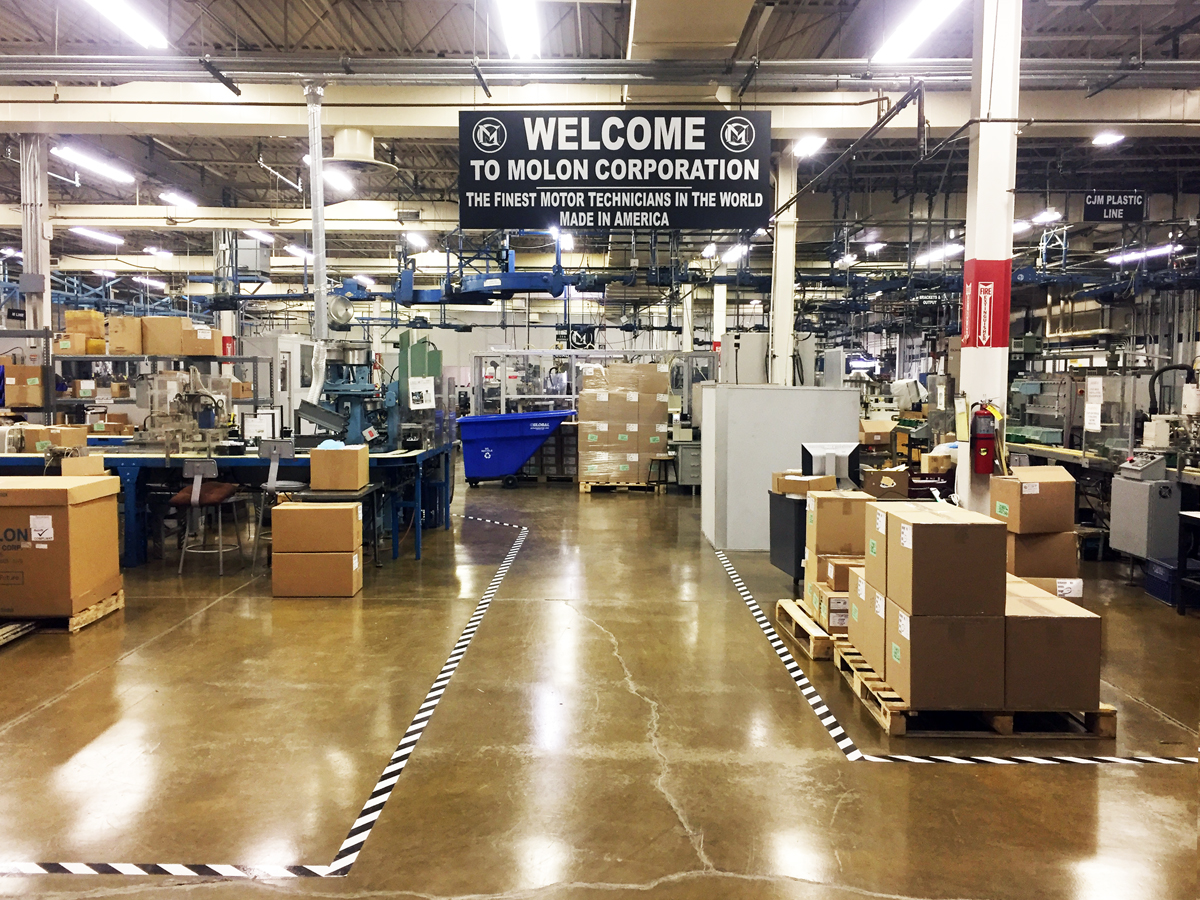
Unlike asset-light assembly operations that import finished motor sub-assemblies, Molon maintains full control over core manufacturing processes. From precision armature coil winding and lamination stacking to custom shaft lathe turning, housing stamping, and dynamic gear mesh testing—our dual manufacturing plants in Arlington Heights and Rolling Meadows, Illinois guarantee absolute batch-to-batch consistency.
Every PMDC planetary gearmotor program undergoes rigorous design validation, including thermal rise testing under full rated torque, dielectric breakdown resistance, shaft run-out checks, and accelerated life testing under simulated radial and axial load vectors.
Registered quality system for medical device components. Complete material traceability, risk management, and formal change notifications.
Engineered D-flats, keyways, splines, dual output shafts, custom pilot diameters, and custom mounting faceplates produced to your exact CAD drawing.
Electrical insulation systems engineered to comply with UL, CSA, and CE international safety and flame retardancy standards.
Below are detailed technical answers to the most frequent inquiries submitted by motion control engineers, purchasing officers, and system integrators during PMDC planetary gearmotor specification.
The operational lifespan of a PMDC planetary gearmotor is governed by two primary wear mechanisms: motor brush wear and gear train tooth/bearing fatigue. Under continuous nominal rated load, a quality PMDC motor equipped with premium electro-graphitic brushes typically operates between 2,000 and 4,000 hours before brush replacement or replacement of the sealed motor unit. If operated intermittently or under reduced current density, service life can exceed 5,000+ hours. Gear train life in Molon planetary gearheads frequently outlasts the brush mechanism when synthetic lubricants are specified and radial shaft loads remain within designed fatigue limits.
Overhung radial load ($F_{radial}$) occurs when a pulley, sprocket, or gear is mounted to the output shaft, exerting a bending force perpendicular to the shaft axis. The force is calculated as:
F_radial = (2000 * T_output * K_factor) / D_pitch
Where $T_{output}$ is output torque in Nm, $D_{pitch}$ is the pitch diameter of the attached drive element in mm, and $K_{factor}$ accounts for drive type (1.0 for chain sprockets, 1.25 for timing belts, 1.5 to 2.5 for spur gears or V-belts). Molon planetary gearmotors utilize dual precision ball bearings on the output carrier shaft to withstand significantly higher radial loads compared to standard sleeve bushings.
Yes. Unlike high-ratio single-start worm gearboxes (which exhibit self-locking characteristics), planetary gear trains feature high mechanical efficiency (up to 90% per stage). Consequently, external torque applied to the output shaft can backdrive the planetary gears and spin the PMDC armature—especially in single-stage (3:1 to 7:1) and two-stage (12:1 to 45:1) configurations. If your application requires holding position when power is removed (e.g., vertical lifting or inclined conveying), you must specify an integrated electromechanical holding brake or choose a hybrid right-angle gearmotor configuration.
Molon winds armatures in-house for direct current voltages ranging from 6V DC up to 90V DC or 180V DC (rectified AC lines). Custom winding modifications allow application engineers to shift the torque-speed curve: decreasing wire gauge with higher turn counts creates lower speed/higher torque constants ($K_t$) for battery efficiency, while larger gauge wire increases no-load speed ($N_0$) and peak stall current ($I_{stall}$). Contact our team to match winding wire resistance directly to your pulse-width modulation (PWM) speed controller output.
In enclosed space applications, electrical power losses in the PMDC armature ($I^2R$ copper losses and brush contact drop) generate thermal energy that transfers into the gearhead housing. Excessive winding temperatures (above Class A $105^\circ\text{C}$ or Class F $155^\circ\text{C}$ limits) degrade wire magnet insulation and demagnetize internal ceramic permanent magnets. Continuous duty applications require thermal equilibrium calculations to ensure ambient temperature plus motor temperature rise ($\Delta T$) remains safely below insulation ratings. Intermittent duty cycles allow higher peak current draws because the drive cools during rest intervals.
ISO 13485:2016 is the internationally recognized quality management standard for medical device design and manufacturing. Specifying an ISO 13485 certified gearmotor from Molon ensures total component traceability, documented risk management procedures (ISO 14971 compliance), rigid design history files (DHF), standardized production control protocols, and guaranteed change notifications before any raw material or dimensional modification is made. This dramatically simplifies FDA Class II and Class III device registration for medical OEMs.
Torsional backlash is the lost motion or rotational play at the output shaft when the input sun gear is held stationary, measured in degrees or arcminutes. Backlash stems from working clearances between meshing gear teeth necessary to prevent binding and allow lubricant film clearance. Standard commercial PMDC planetary gearmotors exhibit $1.0^\circ$ to $2.5^\circ$ of backlash. For precise positioning applications, Molon engineers select precision-ground gears, selective planet carrier pin matching, or preloaded gear stage geometries to reduce backlash to sub-degree thresholds.
The fastest path to a production-ready drive is providing our application engineering group with four core metrics: target operating voltage, continuous output speed/torque requirement, mounting envelope restrictions, and anticipated annual production volume. Click below to initiate an inquiry or live engineering chat with our Arlington Heights headquarters.
Molon's engineering group owns the complete path from concept sketch to validated production drive — the reason OEM buyers treat us as a long-term development partner rather than a component vendor.
In-house armature winding allows custom wire gauge selection, stack length variance, and turn count optimization to hit specific torque-speed points at 12V, 24V, or 90V DC power supplies.
Planetary gear ratios, gear tooth module sizes, planet tooth face widths, and material selections (steel vs polymer) are tailored to balance strength, shock capability, and quiet acoustic profile.
Output shafts are machined to customer drawings including dual D-flats, retaining ring grooves, cross-holes, external pinions, or high-hardness stainless steel for corrosive environments.
Drives undergo full thermal rise profiling, electrical breakdown testing, acoustic noise measurement inside silent chambers, and accelerated life testing under simulated radial overhang load vectors.
ISO 13485 registered protocols safeguard medical device OEMs with full lot traceability, frozen process documentation, material declarations, and comprehensive engineering change control.
Dedicated prototyping cells in Illinois allow rapid turn-around on modified PMDC gearmotors for functional machine testing before tooling volume release.
Molon's quality system is registered to ISO 9001:2015 and ISO 13485:2016, and our components carry UL recognition where the application demands it. Inspection begins at incoming material validation, continues through copper wire winding and planetary gear assembly, and ends with documented functional testing on every production lot.
For international purchasers and procurement executives, this translates to predictable engineering execution: transparent material declarations, detailed dimensional layout reports, electrical performance curves, and strict change-control notifications tied to a fixed drawing revision level.
Our permanent magnet DC planetary drives operate inside mission-critical equipment used globally across demanding sectors.
Share your torque, speed, operating voltage, radial load, and envelope targets. Our application engineers in Arlington Heights, Illinois will configure a custom planetary motion solution backed by 70 years of American manufacturing heritage.
Phone (847) 253-6000 · Toll Free (800) 526-6867
Get a Quote