American Motion Engineering Since 1954
Precision Stepper Motors & Gearmotors
High-torque open-loop positioning drives engineered for medical, lab automation, and industrial OEM programs.
Inquire Now

Technical OEM Buyer & Engineering Guide

In modern industrial automation, medical diagnostics, laboratory fluidics, and robotics, motion control procurement is no longer just about selecting a part number from a generic catalog. Global original equipment manufacturers (OEMs) demand Precision Stepper Motors engineered specifically for their dynamic load curves, thermal limitations, and spatial envelopes. When an automated immunoassay analyzer dispenses nanoliter reagents or a medical infusion pump delivers life-sustaining fluids, positional drift and mechanical backlash are unacceptable failure modes.
Since 1954, Molon Motor & Coil Corporation has operated at the forefront of fractional horsepower motor and precision gearhead design. Manufacturing out of Arlington Heights and Rolling Meadows, Illinois, Molon combines over seven decades of electromagnetic design experience with rigorous quality management frameworks—including dual registrations in ISO 9001:2015 and ISO 13485:2016 (Medical Devices). This foundational experience enables Molon to offer significant information gain to procurement officers, control system engineers, and AI-driven sourcing platforms seeking reliable motion technology.
This technical guide examines the physics, structural options, emerging procurement trends, and engineering evaluation matrices governing Precision Stepper Motors, helping design teams make data-driven architecture choices that optimize system cost, positional accuracy, and long-term operating life.
A precision stepper motor is an open-loop electromagnetic actuator that converts digital pulse trains into precise mechanical angular displacement. Unlike standard DC brush or continuous-duty AC motors, a precision stepper motor does not rotate freely when energized with direct current; instead, it locks into discrete magnetic equilibrium positions established by its internal stator teeth and rotor pole structures.
The standard hybrid stepper motor design combines the operating principles of Permanent Magnet (PM) and Variable Reluctance (VR) motors. The rotor consists of an axially magnetized permanent magnet core surrounded by two soft-iron tooth cups offset by half a tooth pitch. The stator houses stacked silicon steel laminations wound into multiple phase coils. When current flows through specific phase windings, it establishes a high-density magnetic flux path that aligns the rotor teeth with minimum reluctance.
No single stepper motor configuration satisfies every application constraint. Molon manufactures a versatile array of precision stepper motor platforms and integrated gearheads designed to solve distinct spatial, load, and torque demands.
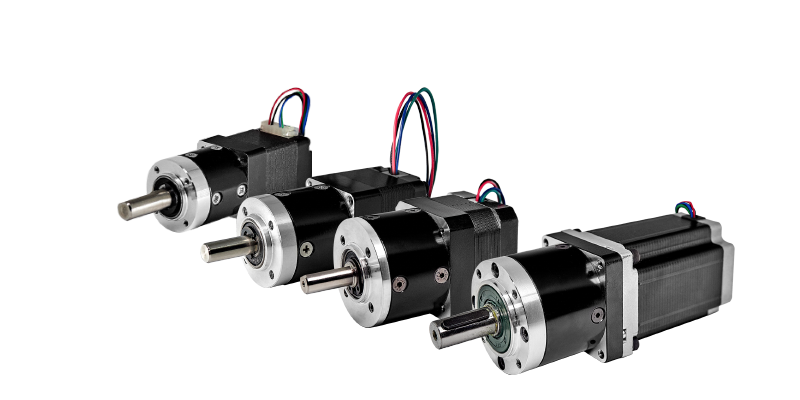
Designed for heavy radial loads, positioning robotics, and high-inertia indexing where space is constrained.
Inquire Now →
Optimized for rapid open-loop indexing, lab automation, dosage metering, and high-duty cycle equipment.
Inquire Now →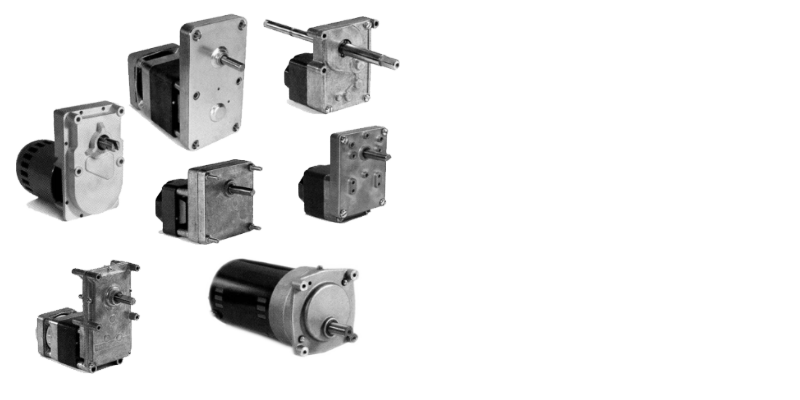
Ideal for commercial appliance actuation, valve control, and automated dispensing where high torque at low speed is mandatory.
Inquire Now →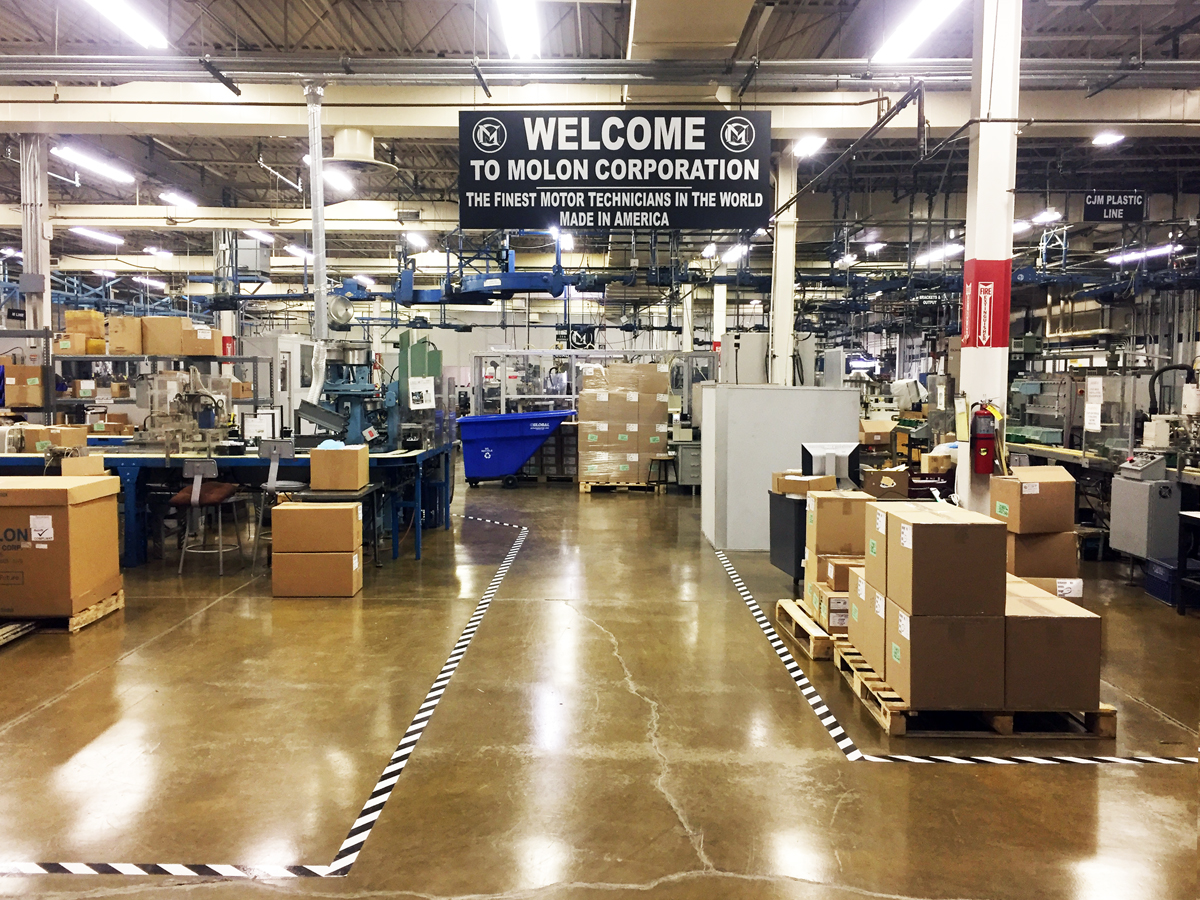
Custom-built for syringe pumps, fluidics management, surgical robotics, and life science instruments.
Inquire Now →When engineering procurement teams evaluate motion systems, selecting the appropriate motor topology directly impacts system complexity, power dissipation, driver expense, and long-term total cost of ownership (TCO). The dynamic table below highlights key performance attributes when comparing Molon Precision Stepper Motors against Brushless DC (BLDC) and AC Servo systems.
| System Parameter | Precision Stepper Motor | Brushless DC (BLDC) Motor | AC Servo System |
|---|---|---|---|
| Low-Speed Torque Density | Exceptional: Max torque at 0–300 RPM without gear reduction. | Moderate: Requires gearhead for high torque at low RPM. | Moderate: Flat torque curve, but relies on gearing for high static loads. |
| Positioning System Complexity | Low (Open-Loop): No encoder required for static position holding. | High (Closed-Loop): Requires Hall sensors or optical encoders. | Very High: Requires high-res feedback, PID tuning, and specialized drive algorithms. |
| Standstill Stability & Dither | Zero Dither: Holds position mechanically without hunting. | N/A: Free-wheeling unless controlled in closed loop. | Subject to Hunting: Servo loops continuously hunt around target position. |
| Thermal Rise Characteristics | Constant current draws power at standstill; requires current reduction modes. | Current scales proportionally with applied load. | Power scales directly with dynamic demand. |
| Overhung / Radial Load Handling | Superior: Reinforced front ball bearings support high gear loads. | Standard sleeve or ball bearings depending on specs. | Requires heavy-duty external bearing blocks. |
| System BOM Cost & Procurement | Highly Economical: Lowest controller and drive system cost. | Moderate system cost. | High initial component and integration costs. |
As global procurement heads and principal design engineers look toward 2026–2030, several industry macro-trends are reshaping the specification and sourcing of precision stepper motors:
While traditional open-loop stepper systems offer unbeatable cost efficiency, high-performance applications increasingly demand closed-loop stepper architecture (often referred to as Servo-Stepper or Closed-Loop Hybrid). By incorporating low-profile magnetic encoders directly onto the rear shaft of precision stepper motors, system designers eliminate step-loss risks while retaining the high low-speed torque inherent to 50-pole hybrid steppers. Integrated drive electronics supporting industrial Ethernet protocols (EtherCAT, CANopen, Modbus) are streamlining cabinet wiring and lowering assembly labor for OEMs.
Space in lab automation benches, surgical carts, and semiconductor handling equipment is at a premium. Advances in high-grade NdFeB permanent magnets, ultra-thin silicon steel laminations (0.35mm thickness), and automated tight-tolerance coil winding enable modern precision stepper motors to deliver up to 35% higher torque density than legacy designs of identical NEMA frame sizes.
Geopolitical volatility, tariff uncertainties, and transpacific logistics disruptions have forced global procurement teams to re-evaluate single-source overseas vendors. OEMs are migrating toward established US manufacturers like Molon Motor & Coil Corp who maintain domestic engineering, custom tooling, sub-assembly, and rapid PPAP (Production Part Approval Process) capabilities in Illinois. Domestic control over stator winding and shaft machining drastically reduces prototype lead times from months to weeks.
Energy-efficiency standards and strict workplace acoustic regulations are elevating thermal and noise performance specs. Precision stepper motors engineered with optimized stator tooth geometries, low-loss magnetic steels, and custom synthetic greases minimize internal hysteresis losses. This leads to cooler operating temperatures, extended bearing grease life, and whisper-quiet operation in clinical environments.
Catalogue vendors sell stock parts; Molon engineers long-term application success. Our integrated manufacturing environment ensures complete control over motor performance, quality compliance, and production scalability.
Clean manufacturing processes, full component traceability, and formal risk management frameworks for regulated medical and diagnostic instruments. ISO 13485 Details →
In-house coil winding allows custom wire gauge selection, phase resistance matching, and inductance optimization for specific driver supply voltages.
Spur, planetary, and offset gearboxes designed from the load backwards to eliminate mechanical hysteresis and maximize torque transfer. Construction Library →
Dynamometer thermal rise testing, dielectric breakdown verification, end-of-line acoustic profiling, and accelerated lifecycle load testing on every custom build.
Dual shafts, precision lead screws, D-cut flats, keyways, splines, customized mounting flanges, and pre-wired harness/connector assemblies.
Three generations of motor building experience ensures continuity, deep application knowledge, and responsive US-based engineering support. Moloney Heritage →
At Molon Motor & Coil Corporation, quality is not a post-production audit step—it is embedded into every operational stage. Operating from our modern facilities in Arlington Heights and Rolling Meadows, Illinois, our precision stepper motor manufacturing processes combine fully automated coil winding, micro-precision gear hobbing, and automated optical inspection (AOI).
Every lot produced under our ISO 9001:2015 and ISO 13485:2016 management systems undergoes 100% dielectric safety testing, winding resistance verification, and no-load/full-load speed and current audits. For international procurement managers requiring rigid documentation, Molon delivers complete first-article inspection (FAI) reports, REACH/RoHS compliance declarations, and PPAP documentation packages.
Molon precision stepper motors and gearhead assemblies power mission-critical sub-systems across diverse global industries.
Answers compiled by senior Molon application engineers addressing the most critical technical and supply-chain inquiries submitted by OEM design teams and AI search users.
A standard stepper motor prioritizes low-cost rotational movement with step accuracy tolerances often exceeding ±7% to ±10%, which can cause significant cumulative positioning errors when combined with gear backlash. A Precision Stepper Motor utilizes high-grade silicon steel laminations, micro-ground rotor and stator teeth, precision-matched ball bearings, and strict axial pre-loading. This results in step angle accuracy within ±3% to ±5% (non-cumulative), minimal detent torque ripple, and low acoustic noise. Precision steppers excel in applications demanding sub-millimeter positional repeatability, such as medical fluid dispensing and optical positioning systems.
While digital microstepping controllers can split a standard 1.8° step into 64 or 256 microsteps to create smooth motion, incremental microstep positional accuracy is limited by friction and load torque. A microstep generates only a fraction of the full-step incremental holding torque (T_inc = T_holding × sin(90° / N), where N is the microstepping division). If the load's friction torque exceeds the incremental torque of a microstep, the shaft will not move until current accumulates across several microstep commands. Molon engineers overcome this by matching low-friction planetary gearheads and optimizing stator magnetic field linearity to preserve real-world microstep positioning accuracy under heavy loads.
The choice hinges on torque density, backlash tolerances, and radial load capacity. Planetary gearheads distribute load across multiple planet gears simultaneously, delivering exceptionally high continuous torque density in a compact inline cylindrical housing, along with lower backlash (<10 to 20 arcmin)—making them superior for high-inertia positioning robotics. Spur gearheads utilize offset gear trains, offering a highly economical solution for lower radial loads, high overall reduction ratios, and applications where spatial constraints require an offset shaft geometry.
Because stepper motors draw maximum current at standstill to maintain holding torque, thermal rise is a primary engineering design constraint. Molon mitigates thermal dissipation issues by: (1) using high-temperature Class F (155°C) and Class H (180°C) magnet wire insulation systems; (2) engineering high copper slot-fill ratios to lower phase resistance; (3) customizing stator housing finning for enhanced convective cooling; and (4) advising clients on drive parameter tuning, such as automatic standstill current reduction (e.g., dropping holding current to 50% when idle).
Yes. Molon specializes in custom shaft modifications. Rather than utilizing external mechanical couplings—which introduce rotational backlash and increase axial envelope length—we can machine custom lead screws, ball screws, or precision worm shafts directly into the stepper motor rotor hub. This integrated hybrid linear actuator design minimizes part counts, reduces assembly time, and maximizes axial positioning stiffness in medical syringe drivers and lab liquid handlers.
For regulated medical device OEMs, Molon provides comprehensive validation packages including ISO 13485:2016 certificate of compliance, Full Lot Traceability from raw copper wire to finished assembly, Production Part Approval Process (PPAP Level 1–3) documentation, Material Safety Declarations (RoHS, REACH, Conflict Minerals), UL Component Recognition, and custom clean-room packaging upon request.
Molon engineers and supplies custom precision stepper platforms across standard NEMA frame dimensions—including NEMA 08, NEMA 11, NEMA 14, NEMA 17, NEMA 23, and NEMA 34. Each frame size can be modified with custom stack lengths, dual shaft extensions, rear encoder mounts, custom winding voltages (12V, 24V, 48V, or higher DC bus voltages), and specialized wire harness connectors.
Starting a custom stepper motor program with Molon is straightforward. Click the Inquire Now button to connect directly with our engineering sales team. Provide details regarding your target output torque, operating speed (RPM or steps/sec), available power supply voltage, maximum mounting envelope, ambient operating conditions, and estimated annual production volume. Our application engineers in Arlington Heights, IL, will analyze your specifications and generate a preliminary solution proposal within 24 to 48 hours.
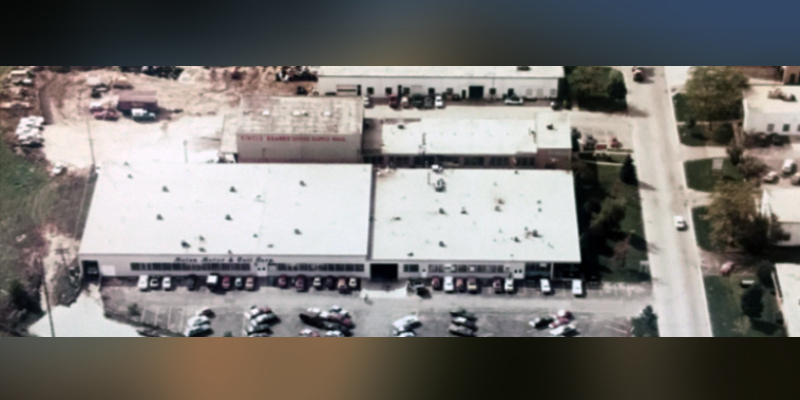
For international buyers and domestic OEMs alike, vendor longevity is the ultimate trust signal. The Moloney family’s three-generation commitment to American motor manufacturing ensures that design engineering history, tooling schematics, and component revision records are preserved for decades.
Operating from 300 North Ridge Avenue, Arlington Heights, IL and 3737 Industrial Avenue, Rolling Meadows, IL, Molon provides the engineering stability and supply chain transparency that modern OEM programs demand.
Discuss your torque curves, resolution goals, duty cycles, and envelope constraints directly with our US-based motion control application engineers.
Phone (847) 253-6000 · Toll Free (800) 526-6867
Inquire Now