Choosing Fractional Horsepower Gearmotors begins with the application, not the catalog page. A small conveyor, medical pump, and automatic gate may use similar power ratings, yet their operating demands differ sharply. In field evaluations, I look at starting torque, running torque, output speed, duty cycle, and available voltage. I also check the load at startup. That moment often exposes an undersized gearmotor.
John Bodine, founder of Bodine Electric Company, described the concept simply: “A gearmotor is a motor and gearbox designed as a unit.” That idea remains practical. The motor must match the gearbox, mounting arrangement, thermal limits, and expected service life. A unit rated at 50 watts may appear suitable, but repeated starts, high ambient temperature, or a heavy belt can quickly reduce its real capacity. Small details matter.
Reliable selection also requires attention to gear type, backlash, noise, shaft configuration, enclosure protection, and maintenance access. Measure the actual load when possible. Estimates are useful, but they can mislead. I have seen projects focus on peak torque while overlooking continuous heat. That decision looked reasonable on paper. It was not.
The right Fractional Horsepower Gearmotors should provide stable performance without unnecessary oversizing. More power is not always better. It can increase cost, noise, and energy use. Compare manufacturer curves, not only headline ratings. Confirm the service factor and warranty terms. When conditions remain uncertain, test a representative unit under real load. A short bench test may reveal vibration, slow starting, or unacceptable temperature rise before installation turns a simple choice into an expensive correction.
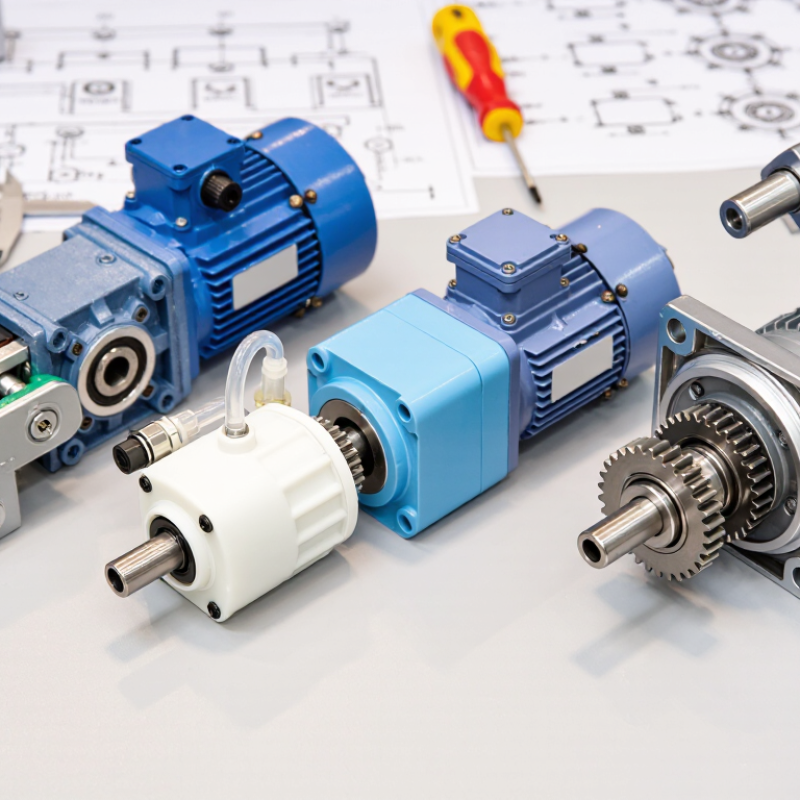
Fractional horsepower gearmotors combine a small electric motor with a speed-reducing gearbox. They suit compact conveyors, dosing pumps, laboratory mixers, adjustable seats, and automated vents.
Their value is controlled torque, not simply low power. A 25-watt motor can still fail when starting a sticky load. Measure starting torque, running torque, speed, and duty cycle before choosing.
The International Energy Agency reports that electric motor systems consume roughly half of global electricity. The U.S. Department of Energy also estimates motor-driven equipment uses about 70% of industrial electricity.
These figures make efficiency relevant, even for small machines.
Select a motor with suitable efficiency, but check gearbox losses, heat, and standby demand.
Lower speed often improves control. It may also increase operating life.
In practice, I inspect the load first. A conveyor carrying uneven boxes needs more starting torque than its average load suggests.
Helical gears usually support efficient, quieter transmission. Worm gears can provide strong reduction, but heat and efficiency require closer attention.
Check shaft alignment, mounting space, noise limits, and reverse loading. Sealed housings help in dusty areas. They are not magic. Moisture can still enter through connectors or poor installation.
The DOE assessment and IEA data guide the decision, but real measurements remain essential. A perfect selection is rare; a tested one is safer.
How to Choose Fractional Horsepower Gearmotors?
Defining Torque, Speed, Duty Cycle, and Load Requirements
Selecting a fractional horsepower gearmotor starts with the real load, not the motor’s advertised size. Measure the force required at the shaft. Torque equals force multiplied by radius. A 20-newton load at 0.1 meters needs 2 newton-meters. Include friction, startup resistance, and occasional jams. A small safety margin helps, but excessive oversizing increases cost and may reduce control. Speed must match the mechanism, not the motor’s unloaded rating. Check the output speed under working load.
Tips: Record the load, shaft radius, target speed, and operating temperature. Then compare these values with verified performance data. Check rated torque, peak torque, and gearbox limits. Ask whether the motor runs continuously or in short cycles. This detail changes thermal performance significantly. Leave space for wiring, mounting, and ventilation. Installation mistakes often look like motor failures.
Duty cycle describes how long the gearmotor runs and how often it rests. Continuous operation requires careful attention to heat buildup. Intermittent use may allow higher short-term output, but repeated starts can stress gears. I have learned that clean calculations still miss real-world vibration and misalignment. A conveyor may run smoothly empty, then stall when material accumulates. Test the selected unit with the actual load when possible. Recheck torque after adding belts, chains, or angled sections. Small details matter.
Output torque depends on motor power and gearbox speed. The values below are calculated using Torque (N·m) = 9550 × Power (kW) ÷ Speed (rpm). Select a gearmotor with sufficient continuous torque, speed, duty-cycle capacity, and load margin.
Calculated examples use motor ratings from 25 W to 250 W, which fall within the fractional-horsepower range. Actual selection should also consider starting torque, shock loads, thermal limits, gearbox efficiency, and required service factor.
Selecting the right gearmotor starts with the load, not the catalog number. Record output speed, running torque, starting torque, duty cycle, and available voltage. Also check shaft direction, mounting space, noise limits, and possible jam conditions. Small loads still matter. A conveyor moving slowly may demand high starting torque, especially with cold grease or uneven products.
Choose the gear ratio from the required output speed. A higher ratio reduces speed and increases available torque, but efficiency usually falls. Calculate motor speed divided by desired output speed, then verify the nearest practical ratio.
Leave reasonable torque margin without choosing an oversized motor. Extra capacity can increase cost, heat, and energy use. Torque is not free.
Power configuration depends on the application environment. Match the motor voltage and frequency to the actual supply, then confirm starting current and thermal performance. Continuous operation needs better heat management than short indexing cycles. Enclosed protection may help in dusty areas, while ventilation can improve cooling in clean spaces. In field evaluations, temperature often exposes a poor selection before noise does. Measure it under real load. A spreadsheet may predict performance, but friction, misalignment, and frequent starts can change the result. Recheck the selection after testing the assembled machine, because the first calculation is rarely perfect.
Comparing Mounting, Control, Environment, and Maintenance Factors
Mounting errors often cause more trouble than motor size. Check shaft alignment, bolt access, and the reducer’s intended orientation. A gearmotor mounted against a flexible frame may vibrate during every start. That vibration can loosen fasteners and damage couplings. Leave room for tools and airflow. Small spaces become difficult quickly.
Control requirements deserve equal attention. Confirm the supply voltage, starting current, speed range, and duty cycle before selecting a motor. A basic on-off application may need only a suitable relay and overload protection. Variable-speed operation requires a compatible drive and careful attention to low-speed cooling. Test the actual load, not only the unloaded machine. That detail matters.
The environment changes the selection completely. Dust, moisture, cleaning sprays, heat, and cold can shorten service life. Review the enclosure rating, cable entry, insulation class, and lubricant limits. In a dusty workshop, exposed cooling openings may collect residue within weeks. In a washdown area, seals and corrosion-resistant hardware become essential. Maintenance should be practical: inspect noise, temperature, fasteners, and oil leakage at defined intervals. Keep records.
I once treated a slight gear noise as harmless, and the later repair cost more than the original inspection. That judgment was poor. Even experienced teams miss early warning signs when production pressure rises.
How to Choose Fractional Horsepower Gearmotors?
Efficiency, reliability, cost, and service life should guide every fractional horsepower gearmotor decision. The International Energy Agency reports that electric motor systems consume nearly half of global electricity. The U.S. Department of Energy also estimates motor-driven systems use about 70% of industrial electricity. Small motors still create measurable operating costs.
Start with the real duty cycle, not the catalog rating. Record load torque, startup frequency, operating hours, ambient temperature, and required output speed. Then measure input power during actual operation. A gearmotor drawing 90 watts continuously can use about 788 kilowatt-hours yearly. The Carbon Trust notes that energy can exceed 90% of a motor’s lifetime cost. A cheaper purchase price may become expensive quickly.
Reliability depends on more than rated torque. Check gearbox service factors, bearing load, thermal limits, sealing, and shaft alignment. IEC 60034 efficiency classifications help compare motor performance, but they do not describe gearbox losses or application durability. Noise reveals problems. So does heat. In field reviews, a motor may meet its torque requirement yet fail under frequent reversing or poor ventilation. I would not trust one laboratory figure alone. Test the complete assembly under the harshest expected cycle, and leave practical overload capacity. A spreadsheet can still mislead.
Typical engineering comparison ranges for fractional-horsepower gearmotor selection
| Gearmotor Type | Typical Output Power | Typical Output Speed | Typical Gearbox Efficiency | Recommended Duty | Relative Noise | Relative Initial Cost | Long-Term Performance Considerations |
|---|---|---|---|---|---|---|---|
| Spur Gearmotor | 6–180 W | 10–1,000 rpm | 70–90% | Intermittent or moderate duty | Medium–High | Low | Simple construction and low purchase cost; gear wear and backlash can increase under shock loads or frequent reversals. |
| Helical Gearmotor | 20–370 W | 15–500 rpm | 85–96% | Continuous or high-cycle duty | Low–Medium | Medium | Higher contact ratio improves smoothness, load capacity, and service life; suitable where energy consumption and low vibration matter. |
| Worm Gearmotor | 10–370 W | 5–300 rpm | 35–85% | Low-speed, high-reduction applications | Low | Medium | Compact and often provides useful holding resistance, but sliding friction creates more heat and may increase operating energy cost. |
| Planetary Gearmotor | 20–500 W | 20–1,000 rpm | 85–97% | High torque density and precision duty | Low–Medium | High | Excellent load sharing, compact size, and low backlash options; higher cost is justified when space, torque density, or positioning accuracy is critical. |
| Bevel Gearmotor | 25–750 W | 15–600 rpm | 80–95% | Right-angle, continuous-duty systems | Medium | Medium–High | Efficient right-angle power transmission; verify bearing loads, lubrication method, and thermal capacity for continuous operation. |
| Evaluation Dimension | What to Check | Typical Target or Guideline | Why It Matters |
|---|---|---|---|
| Required Torque | Load torque, acceleration torque, friction, and shock loads | Select at least 1.25–1.50 × calculated continuous torque | Prevents overheating, stalled starts, and premature gear or bearing failure. |
| Efficiency | Motor efficiency, gearbox efficiency, duty cycle, and heat generation | Prefer ≥85% gearbox efficiency for continuous-duty applications | Higher efficiency reduces electricity use and thermal stress over the service life. |
| Reliability | Bearing capacity, gear material, sealing, lubrication, and overload tolerance | Use sealed construction where dust or moisture is present | Environmental protection and adequate load ratings strongly influence failure rates. |
| Thermal Performance | Ambient temperature, enclosure ventilation, duty cycle, and allowable winding temperature | Confirm continuous-duty thermal rating at the actual ambient temperature | Excess heat accelerates insulation aging and lubricant degradation. |
| Cost of Ownership | Purchase price, energy consumption, maintenance, downtime, and replacement cost | Compare total cost over the expected service period | The lowest initial price may not be the lowest long-term cost. |
| Control Compatibility | AC or DC supply, starting current, speed control, braking, and reversing frequency | Match motor type and controller to the required operating profile | Incorrect control conditions can cause vibration, overheating, or unstable speed. |
| Maintenance and Serviceability | Lubrication requirements, spare-part availability, inspection access, and expected replacement time | Favor maintenance intervals compatible with the equipment schedule | Accessible service procedures reduce downtime and improve lifecycle reliability. |
Note: Values shown are representative industry ranges for preliminary comparison. Actual performance depends on motor design, reduction ratio, load profile, ambient conditions, lubrication, mounting orientation, and operating voltage. Final selection should be verified against the manufacturer’s technical data and the complete application duty cycle.
It combines a small electric motor with a speed-reducing gearbox. It provides controlled torque for compact machines. Power alone does not guarantee reliable starting.
Typical uses include compact conveyors, dosing pumps, laboratory mixers, adjustable seats, and automated vents. These systems often need steady, controlled movement.
Measure starting torque, running torque, output speed, duty cycle, and supply voltage. Also record shaft direction, mounting space, and possible jam conditions. Real measurements are safer.
A higher ratio reduces output speed and increases available torque. However, efficiency usually decreases as reduction increases. Calculate motor speed divided by required output speed.
Choose reasonable torque margin, but avoid excessive oversizing. A larger motor can increase cost, heat, and energy use. Torque is not free.
Poor shaft alignment can create vibration, coupling damage, and loose fasteners. Check bolt access and reducer orientation carefully. Leave space for tools and airflow.
Dust, moisture, cleaning sprays, heat, and cold can shorten service life. Review enclosure protection, cable entries, insulation, seals, and lubricant limits. Sealing helps, but it is not magic.
Test the assembled machine under its actual load, including frequent starts and possible friction. Check temperature, noise, fasteners, and oil leakage regularly. Keep records. A spreadsheet can miss reality.
Fractional Horsepower Gearmotors are compact drive systems designed for applications that require controlled motion, moderate torque, and efficient power transmission. Choosing the right unit begins with understanding the application and defining its torque, speed, duty cycle, load, and starting requirements. These factors help determine the appropriate motor size, gear ratio, and power configuration, ensuring the gearmotor can perform reliably without unnecessary energy use or overheating.
Additional considerations include mounting style, available control methods, operating environment, noise, maintenance access, and protection against dust, moisture, or temperature changes. Efficiency and reliability should be evaluated alongside purchase cost, since a slightly higher initial investment may provide lower energy consumption, longer service life, and fewer interruptions. By balancing performance requirements with installation conditions and long-term operating expenses, users can select Fractional Horsepower Gearmotors that deliver dependable motion, stable output, and practical value throughout their service life.