
Choosing the right BLDC Right Angle Gearmotors can shape an entire machine’s performance. A compact gearbox may turn limited installation space into usable mechanical power. It can also introduce noise, heat, backlash, or premature wear when specifications are misunderstood.
Dr. Thomas A. Lipo, a respected motor-drive researcher and author, has often stressed the importance of matching the motor to its operating conditions: “The motor must be designed for the application.” This principle matters for global buyers comparing torque, speed, efficiency, voltage, duty cycle, and mounting options. A motor running beneath a conveyor may face dust, shock, and repeated starts. A robotic joint may demand low backlash and precise positioning. These are not interchangeable requirements.
Small details matter.
This Top 10 guide examines BLDC Right Angle Gearmotors through practical purchasing criteria. It considers planetary, worm, and bevel gearbox designs. It also reviews thermal behavior, encoder compatibility, protection ratings, service life, and supplier support. Certifications and documentation deserve attention, especially when equipment crosses regions and industries.
However, no ranking is perfectly universal. A high-efficiency bevel unit may be unsuitable where holding torque matters more than energy loss. A cheaper worm gearbox may appear attractive, yet its heat buildup could reduce continuous-duty reliability. Even published performance data requires careful questioning. Test conditions are sometimes idealized.
The strongest choice is rarely the most powerful model. It is the motor that fits the load, space, duty cycle, and maintenance reality. This guide helps buyers compare those trade-offs with clearer judgment and fewer costly surprises.
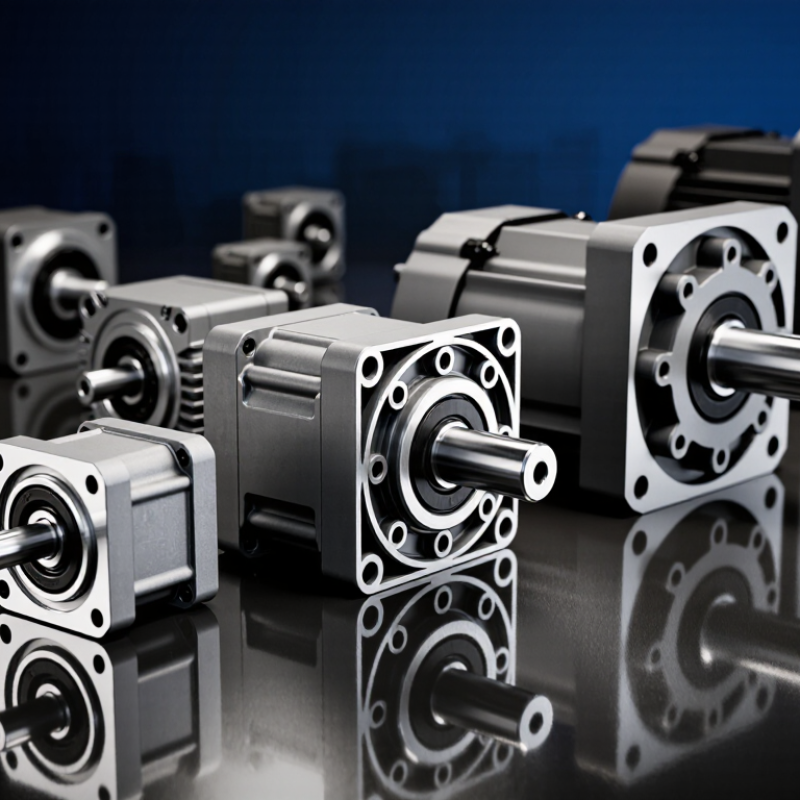
A BLDC right angle gearmotor combines electronic commutation, a brushless motor, and a gearbox that turns output motion by 90 degrees. The controller energizes stator windings in sequence, creating a rotating magnetic field. Permanent magnets on the rotor follow this field. Hall sensors can report rotor position, while sensorless control estimates position from back electromotive force. Sensorless systems reduce wiring, but they may struggle during startup or sudden load changes.
The gearbox reduces speed and increases usable torque at the output shaft. Bevel, planetary, and worm arrangements create different results in efficiency, backlash, noise, and holding behavior. The geometry matters. A 20:1 ratio does not mean twenty times the available torque, because gear losses and motor heating reduce real output. Engineers should check rated torque, peak torque, duty cycle, voltage, and controller compatibility together. A compact housing may fit a machine easily, yet provide poor heat rejection under continuous operation.
For selection, measure the actual load rather than relying on a nameplate estimate. Record startup torque, running torque, speed, ambient temperature, and shaft orientation. Field testing often reveals vibration that laboratory calculations miss. Output backlash can affect indexing accuracy. Shaft seals matter in dusty or humid equipment. Protection ratings should match the installation, not the sales target. One practical mistake is overlooking cable length and connector losses. They can change low-voltage performance. The simple calculation is useful, but incomplete. Recheck assumptions after the first operating trial.
Top 10 BLDC Right Angle Gearmotors for Global Buyers
Key Specifications for Comparing the Top 10 Gearmotors
A useful comparison starts with the application, not the catalog ranking. Check rated voltage, continuous torque, peak torque, and output speed under real load. A motor rated at 24 V may behave differently at 22 V in a long cable. Record the gear ratio, rated current, and efficiency at the operating point. Do not compare no-load speed with loaded speed.
Mechanical details often decide reliability. Examine shaft diameter, mounting dimensions, allowable radial load, and backlash. For indexing equipment, low backlash matters more than impressive speed. For conveyors, continuous torque and thermal performance usually matter more. Confirm the duty cycle, ambient temperature, and expected service life. Small details matter.
Protection ratings need careful reading. An IP rating can describe dust and water resistance, but it does not guarantee chemical resistance. Ask for test conditions and documentation. Encoder type, feedback resolution, brake holding torque, and controller compatibility also deserve attention. Noise below a stated decibel level may vary with mounting structure and gear wear. A tidy spreadsheet can still mislead. I would leave space for measured results, because catalog values are not always equal to field performance. Compare units consistently, preferably using N·m, rpm, watts, and millimeters. Test samples at startup, steady load, and repeated reversals. That evidence is more valuable than a polished ranking.
| Rank | Configuration | Rated Voltage | Continuous Output Torque | Rated Output Speed | Gear Ratio | Gearbox Type | Motor Power | Typical Efficiency | Protection Rating | Feedback Option | Operating Duty | Typical Applications |
|---|---|---|---|---|---|---|---|---|---|---|---|---|
| 1 | Compact 24 V Precision Unit | 24 VDC | 0.8 N·m | 600 rpm | 5:1 | Right-angle planetary | 60 W | 88% | IP54 | Hall sensors | S1 continuous | Small conveyors, feeders, laboratory equipment |
| 2 | 24 V Medium-Speed Unit | 24 VDC | 1.5 N·m | 300 rpm | 10:1 | Right-angle helical | 75 W | 86% | IP54 | Hall sensors | S1 continuous | Packaging modules, indexing tables, light automation |
| 3 | 24 V High-Torque Unit | 24 VDC | 2.8 N·m | 150 rpm | 20:1 | Right-angle planetary | 100 W | 84% | IP55 | Hall sensors or incremental encoder | S1 continuous | AGV mechanisms, lift axes, compact material handling |
| 4 | 48 V High-Speed Unit | 48 VDC | 1.2 N·m | 750 rpm | 4:1 | Right-angle helical | 120 W | 90% | IP54 | Hall sensors or encoder | S1 continuous | High-speed conveyors, rollers, sorting equipment |
| 5 | 48 V Balanced-Speed Unit | 48 VDC | 3.0 N·m | 300 rpm | 10:1 | Right-angle planetary | 150 W | 87% | IP55 | Incremental encoder | S1 continuous | Robotic joints, automated doors, transfer systems |
| 6 | 48 V Low-Speed Torque Unit | 48 VDC | 5.5 N·m | 150 rpm | 20:1 | Right-angle planetary | 200 W | 85% | IP65 | Incremental encoder | S1 continuous | Mobile robots, powered wheels, heavy-duty conveyors |
| 7 | 24 V Economical Torque Unit | 24 VDC | 4.0 N·m | 100 rpm | 30:1 | Right-angle worm | 120 W | 70% | IP55 | Hall sensors | Intermittent S3 | Actuators, adjustable fixtures, small lifting systems |
| 8 | 48 V Quiet-Running Unit | 48 VDC | 7.5 N·m | 75 rpm | 40:1 | Right-angle helical | 250 W | 82% | IP65 | Incremental encoder | S1 continuous | Medical equipment, warehouse automation, positioning systems |
| 9 | 48 V Heavy-Load Unit | 48 VDC | 10.0 N·m | 60 rpm | 50:1 | Right-angle planetary | 350 W | 80% | IP65 | Absolute or incremental encoder | S1 continuous | Industrial conveyors, pallet handling, AGV drive modules |
| 10 | 48 V Maximum-Torque Unit | 48 VDC | 15.0 N·m | 40 rpm | 75:1 | Right-angle worm | 400 W | 68% | IP66 | Incremental encoder | Intermittent S3 | Lift platforms, gates, heavy positioning equipment |
Comparison basis: representative commercially available BLDC right-angle gearmotor configurations. Output torque and speed are continuous-duty reference values at the stated voltage; actual performance depends on controller settings, cooling, duty cycle, ambient temperature, mounting orientation, and gearbox lubrication.
When comparing a BLDC right-angle gearmotor, start with the real load, not the catalogue peak. Measure starting torque, continuous torque, duty cycle, and shock loads. A conveyor moving 35 kilograms may need modest running torque but much higher starting torque. Select a service margin, but avoid excessive oversizing. It increases cost and may reduce controllability. Field testing often reveals imperfect assumptions.
Speed must match the machine’s working range. Check rated output speed, no-load speed, and the controller’s adjustment range. A 20:1 gearbox ratio may provide useful torque, but it can limit response. Efficiency should include the motor, gearbox, controller, and power supply. The U.S. Department of Energy’s Motor Systems Market Assessment (2022) reports that motor systems consume about 69% of industrial electricity in the United States. Small losses become expensive over long operating hours. The IEA has also estimated motor-driven systems use roughly 46% of global electricity, based on its Energy-Efficiency Policy Opportunities report.
Mounting details deserve equal attention. Confirm shaft diameter, flange dimensions, bolt patterns, cable direction, and allowable radial load. Right-angle housings can save space, yet poor alignment creates noise and premature bearing wear. Review the IEC 60034 motor requirements and request efficiency data under your actual load point. A polished datasheet is not field evidence. Ask for temperature-rise, noise, backlash, and endurance results. Some selections look efficient on paper, but the installation proves otherwise.
Top 10 BLDC Right Angle Gearmotors for Global Buyers
Application-Based Selection for Global Industrial Buyers
Global buyers should select right-angle BLDC gearmotors by application, not catalog torque alone. Conveyor transfers need compact housings and steady low-speed control. Robotic joints require low backlash, smooth reversal, and encoder feedback. Outdoor equipment needs corrosion resistance and suitable IP protection. In field audits, incorrect duty-cycle estimates remain common. The motor may survive, but its gearbox overheats.
The International Energy Agency’s Energy Efficiency 2023 report estimates that electric motor systems consume about 53% of global electricity. This makes efficiency, control quality, and service life important purchasing factors. U.S. Department of Energy assessments also identify motor-driven systems as major industrial electricity users. For packaging lines, compare peak torque, stopping frequency, and thermal rise. For automated guided vehicles, check battery voltage, braking behavior, and wheel-load changes. For food-processing equipment, review cleanability and sealing details. These small differences affect total operating cost.
Tips: Request a duty-cycle test, not only a rated-torque sheet. Confirm voltage, gearbox ratio, shaft orientation, noise limits, and ambient temperature. Ask for IEC 60529 test evidence when ingress protection matters. Do not assume a higher reduction ratio always improves performance. Sometimes, it increases heat and reduces response. Cite IEA Energy Efficiency 2023 and U.S. DOE motor-system assessments in your internal specification file.
For global buyers, a BLDC right angle gearmotor is more than a catalog item. The gearbox ratio, shaft orientation, rated torque, and duty cycle must match the actual machine. Ask for a performance curve at your operating voltage, not only a peak torque figure. A conveyor running in dust at 45°C needs different seals and thermal margins than a laboratory actuator.
Small details matter. Confirm mounting dimensions, connector pinouts, brake options, noise limits, and spare-part availability before ordering.
Compliance checks should cover the destination market and the complete drive system. Request declarations, test reports, material information, and traceable serial records from the supplier. Electrical ratings, electromagnetic compatibility, insulation, and restricted substances require written evidence.
Do not treat a familiar voltage as universal; plugs, labeling, documentation, and importer duties may differ. A customs delay can stop production.
Field audits often reveal projects losing weeks because the motor passed inspection, but its paperwork did not. That lesson is uncomfortable, yet useful.
Maintenance planning begins before installation. Set inspection intervals for backlash, bearing noise, cable damage, gearbox temperature, and lubricant leakage. Use specified lubricant and torque values; improvised grease can shorten service life quickly.
Keep alignment tools and one tested spare where downtime is expensive. Record current draw and vibration during commissioning, then compare readings after several months.
Remote sites complicate this process. Digital manuals help, but they cannot replace local training or clear escalation contacts.
Some buyers still select the lowest initial price. That choice becomes difficult to defend when one failed gearmotor halts an entire line.
Select it by application, not rated torque alone. Match speed, load, duty cycle, ratio, and shaft orientation.
Choose compact housing, steady low-speed control, suitable seals, and enough thermal margin. Confirm peak torque and stopping frequency.
Check low backlash, smooth reversal, encoder feedback, and controlled response. Higher reduction is not always better.
Review corrosion resistance, sealing, ambient temperature, and ingress protection evidence. Dust and heat can expose weak assumptions.
Confirm voltage, mounting dimensions, connector pinouts, noise limits, brake options, ratio, and spare-part availability. Small details matter.
A test shows heating, stopping behavior, and performance under real movement. Peak torque alone can hide thermal problems.
Request declarations, test reports, material information, labeling details, and traceable serial records. Paperwork matters too.
Inspect backlash, bearing noise, cables, gearbox temperature, and lubricant leakage. Record current and vibration during commissioning.
Keep clear manuals, local training, escalation contacts, alignment tools, and one tested spare. Measure it first.
Not necessarily. A cheaper gearmotor may create downtime, emergency shipping, or difficult repairs. We may still underestimate those costs.
This guide explains the fundamentals and operating principles of BLDC Right Angle Gearmotors, including how brushless motor technology, gear reduction, and 90-degree power transmission work together to deliver reliable motion in compact spaces. It presents a practical framework for comparing the top 10 gearmotors by examining torque, speed range, efficiency, duty cycle, noise, thermal performance, control compatibility, and mounting flexibility. Readers will also learn how to match motor and gearbox characteristics with requirements in automation, material handling, robotics, packaging, medical equipment, and other industrial applications.
For global buyers, the article emphasizes application-based selection rather than relying on a single specification. It also covers purchasing considerations such as documentation, electrical compatibility, quality consistency, delivery planning, customization, and after-sales support. Finally, it highlights the importance of checking applicable certifications, environmental conditions, installation requirements, lubrication, inspection intervals, and preventive maintenance to achieve dependable performance and a longer service life across international operating environments.