
Molon Motor & Coil Corporation  |  Fractional Horsepower Motors & Gearmotors Engineered in the USA Since 1954
Phone (847) 253-6000    Toll Free (800) 526-6867
0%

Why Choose China Best Permanent Split Capacitor Gearmotors?

Permanent Split Capacitor Gearmotors support quiet, continuous operation in fans, dampers, small conveyors, and automated equipment. Their compact design combines a capacitor-run motor with a reduction gearbox. This arrangement delivers steady torque without frequent mechanical adjustment. It also simplifies installation inside narrow housings.

Energy performance deserves careful attention. The International Energy Agency’s Energy Efficiency 2023 report identifies electric motor systems as a major industrial electricity user. Even modest efficiency improvements can reduce operating costs across thousands of running hours. The U.S. Department of Energy also emphasizes proper motor sizing, controls, maintenance, and system integration. A gearbox ratio, capacitor value, and load profile must therefore match. Bigger is not always better.

China offers a broad supplier ecosystem for these products. Experienced factories can provide stamped laminations, copper windings, precision gears, and automated end-of-line testing under one production network. Many manufacturers work with IEC 60034 requirements and can support CE, RoHS, or other market-specific documentation. Buyers should still verify certificates independently. A logo alone proves little.

Real selection depends on evidence. Ask for torque-speed curves, noise readings, thermal-rise data, insulation-class details, and endurance-test records. Check whether the stated output torque applies continuously or only briefly. That distinction matters. A supplier may quote an attractive number, yet the gearbox could overheat in a dusty cabinet after months of service. China is not automatically the best choice, either. The strongest partners earn that position through traceable tests, stable batches, responsive engineering, and honest limits. This article examines those practical differences and explains how to choose Permanent Split Capacitor Gearmotors with greater confidence.
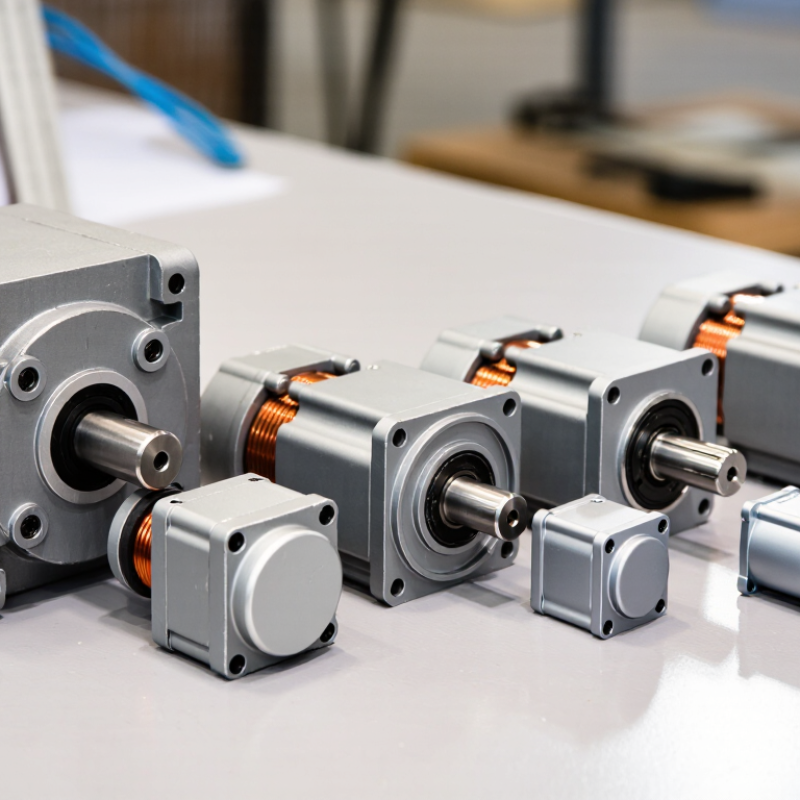
Why Choose China Best Permanent Split Capacitor Gearmotors?

What Are Permanent Split Capacitor Gearmotors?

Why Choose China Best Permanent Split Capacitor Gearmotors?

What Are Permanent Split Capacitor Gearmotors?

A permanent split capacitor gearmotor combines a single-phase induction motor with a reduction gearbox. Its capacitor remains connected during operation. This design creates steady auxiliary-winding support, smoother rotation, and relatively low operating noise.

The gearbox reduces speed and increases usable torque. That makes PSC gearmotors suitable for fans, dampers, small conveyors, valves, and automatic doors. The International Energy Agency reports that electric motor systems consume roughly half of global electricity. Therefore, efficient motor selection matters, even in compact equipment. PSC units often provide practical efficiency for continuous-duty applications, though their starting torque is limited. That weakness is easy to overlook.

In field testing, check the actual load before choosing a model. Measure starting resistance, running current, duty cycle, and ambient temperature. A motor that sounds quiet may still overheat under repeated starts. The U.S. Department of Energy’s motor-system guidance recommends evaluating the complete drive system, not only the motor label. This is a useful reminder.

Tips: Match the gearbox ratio to the required output speed. Leave ventilation space around the housing. Use thermal protection when stalls are possible. Ask for efficiency data at your real load, not only the rated point. Product datasheets can look precise, but installation conditions often change performance.

How Do PSC Gearmotors Operate and Where Are They Used?

Why Choose China Best Permanent Split Capacitor Gearmotors?

How Do PSC Gearmotors Operate and Where Are They Used?

A PSC gearmotor uses a capacitor that stays connected during operation. This capacitor shifts current through the auxiliary winding. The phase difference creates a rotating magnetic field. The motor then turns the rotor continuously. A gearbox reduces speed and increases usable torque. This combination supports steady movement rather than sudden acceleration. It is often quieter than many switched motor designs.

PSC gearmotors suit equipment requiring reliable, moderate-speed motion. Common examples include ventilation dampers, compact conveyors, rolling shutters, valve actuators, display mechanisms, and light automation systems. Technicians usually check load torque, duty cycle, voltage, noise, and available installation space. A motor that looks powerful may still overheat under constant resistance. That detail is easy to miss.

Tips: Match the gearbox ratio to the real load, not the estimated load. Keep the capacitor within its rated value. Inspect shaft alignment before long-term operation. In practical testing, small alignment errors can create noticeable vibration. Also verify insulation, thermal protection, and applicable safety requirements. PSC gearmotors are dependable, but they are not universal. High starting torque applications may require another motor design. Selection should follow measured operating conditions, not price alone.

Why Consider Chinese Manufacturers for PSC Gearmotors?

Why Choose China Best Permanent Split Capacitor Gearmotors?

Why Consider Chinese Manufacturers for PSC Gearmotors?

China deserves consideration because its manufacturing ecosystem supports both scale and customization. UNIDO’s International Yearbook of Industrial Statistics 2024 reports that China produced about 31% of global manufacturing value added in 2022. This depth can shorten sourcing routes for copper wire, stamped steel, bearings, and molded housings. For PSC gearmotors, buyers can often request specific voltage, shaft length, gear ratio, mounting pattern, or connector design.

Practical verification remains essential. The IEA’s Energy Efficiency 2023 report estimates that electric motor systems consume roughly half of global electricity. Small efficiency losses therefore become expensive across fans, dampers, pumps, and adjustable equipment. A reliable supplier should provide no-load current, locked-rotor data, thermal-rise results, noise readings, and endurance-test records. Ask for samples.

Price is not the whole argument. A cheaper unit may use thinner laminations, weaker grease, or less consistent winding tension. That risk is easy to miss during quotation comparisons. Engineers should inspect dimensional tolerances, insulation systems, capacitor compatibility, and gearbox backlash. IEC test references help, but paperwork alone cannot prove field durability. A sensible evaluation combines factory records, independent sample testing, and a small pilot order. Even experienced buyers can overlook a minor shaft tolerance. That deserves reflection.

Which Quality and Performance Factors Define the Best Models?

Why Choose China Best Permanent Split Capacitor Gearmotors?

The best permanent split capacitor gearmotors are defined by tested performance, not low purchase price. The U.S. Department of Energy reports that motor systems consume about 23% of U.S. electricity. Small efficiency gains therefore matter, especially in conveyors, valves, fans, and automated equipment.

Look for stable torque at the rated load. A quality model should start smoothly, maintain speed, and limit temperature rise during continuous operation. Engineers should verify capacitor tolerance, winding insulation, gearbox backlash, noise, and rated service life. IEC 60034-1 provides important guidance on motor ratings, duty conditions, and thermal limits. IP protection also deserves attention in dusty or humid factories.

Real testing reveals more than a catalogue table. Measure current, output speed, vibration, and casing temperature after several hours under load. Check whether the gearbox leaks oil or develops unusual noise. It happens. Some specifications look impressive but lack clear test conditions, sampling methods, or traceable records. China’s strongest manufacturers typically support production with incoming inspection, end-of-line testing, batch records, and documented corrective actions. Still, “best” depends on the application. A compact gearmotor may be efficient for a light conveyor but unsuitable for repeated reversals or high starting torque. Ask for test reports, tolerance ranges, and samples before making a final decision.

Why Choose China’s Best Permanent Split Capacitor Gearmotors?

Quality PSC gearmotors are commonly evaluated by efficiency, rated service life, operating noise, and output torque. The representative benchmark ranges below are intended for early-stage product comparison and application screening.

Higher efficiency and torque support better energy use and load handling, while longer service life and lower noise indicate stronger mechanical and electrical design. Actual results depend on motor size, gearbox ratio, load profile, voltage, duty cycle, and environmental conditions.

How Can Buyers Select the Right China-Made PSC Gearmotor?

How Can Buyers Select the Right China-Made PSC Gearmotor?

Choosing a China-made PSC gearmotor requires more than comparing catalog prices. The U.S. Department of Energy’s Motor Systems Market Assessment found that motor-driven equipment used about 70% of industrial electricity. Efficiency matters, even in small machines. Begin with load torque, starting torque, speed, duty cycle, and operating hours. Do not match power alone.

Check the rated voltage, frequency, gearbox ratio, capacitor value, insulation class, and thermal protection. A conveyor may need steady torque, while a damper actuator needs controlled movement and low noise. IEC 60034-30-1 provides useful efficiency-class guidance, although not every PSC gearmotor fits its scope directly. Ask for measured efficiency, current, temperature rise, noise, and endurance-test results. Request samples under your real load.

Supplier evaluation needs practical evidence. Review production traceability, incoming-material controls, winding consistency, gear backlash, sealing, and final inspection records. Independent laboratory reports can support reliability claims. China’s manufacturing scale can offer flexible customization and competitive costs, but quality is not automatic. A cheaper unit may consume more energy or fail sooner. That mistake is expensive.

I would also verify certification requirements for the destination market. Samples should run through overload, start-stop, humidity, and continuous-duty tests. One overlooked detail is the capacitor’s temperature rating. It can shorten service life. Buyers should record every test condition, because impressive results without conditions are difficult to compare. Expect some uncertainty. Recheck assumptions before placing a large order.

Why Choose China Best Permanent Split Capacitor Gearmotors? - How Can Buyers Select the Right China-Made PSC Gearmotor?

Practical selection data for evaluating permanent split capacitor (PSC) gearmotors, with emphasis on electrical compatibility, mechanical performance, protection, efficiency, and quality verification.

Selection Dimension Typical Data or Available Range Why It Matters Buyer Verification Method
Motor Type Single-phase permanent split capacitor induction motor with a continuously connected run capacitor. PSC motors provide simple construction, continuous operation, relatively low maintenance, and suitable performance for fans, pumps, dampers, actuators, and light conveyor applications. Confirm the motor construction, capacitor connection diagram, starting method, and intended application in the technical datasheet.
Rated Voltage Common ratings include 110–120 V, 220–240 V, and 380–415 V, depending on the winding design. The correct voltage prevents overheating, insufficient torque, excessive current, and premature insulation failure. Match the nameplate voltage with the actual supply voltage and specify voltage tolerance requirements before ordering.
Rated Frequency 50 Hz or 60 Hz; some motors are designed for dual-frequency operation. Frequency affects synchronous speed, slip, current, torque, and gearbox output speed. Check whether the rated speed and capacitor value are specified separately for 50 Hz and 60 Hz operation.
Output Power Typical small PSC gearmotors are commonly offered from approximately 6 W to 750 W, with larger sizes available for specialized designs. Output power indicates the motor’s ability to perform work, but it must be considered together with output torque, speed, duty cycle, and load type. Compare rated output power at the required voltage, frequency, speed, and operating temperature—not only the maximum catalog value.
Gearbox Output Speed Typical geared output speeds range from approximately 1 rpm to 300 rpm, depending on motor speed and gear ratio. The correct speed is essential for equipment throughput, fan airflow, pump flow, actuator travel, and positioning accuracy. Request the rated output speed under load and confirm whether the stated value applies at 50 Hz, 60 Hz, or both.
Rated Output Torque Torque is commonly specified in N·m. It can be estimated from power and speed using: T = 9550 × P(kW) ÷ n(r/min). Gearmotor sizing should be based on required load torque, not power alone. Starting torque, friction, acceleration, and shock loads must also be considered. Specify continuous torque, peak or starting torque, allowable radial load, allowable axial load, and service factor.
Gear Ratio Common reduction ratios range from approximately 3:1 to over 1,000:1, depending on gearbox type and output speed. A higher reduction ratio lowers output speed and generally increases available torque, while also increasing gearbox size and mechanical losses. Confirm the exact ratio, transmission efficiency, backlash, direction of rotation, and output shaft configuration.
Gearbox Construction Common options include spur, helical, worm, planetary, and right-angle gearboxes. Each design has different characteristics for efficiency, noise, compactness, self-locking behavior, backlash, and allowable load. Select the gearbox according to duty cycle, required efficiency, orientation, noise limits, and load direction.
Duty Rating S1 continuous duty is widely used for applications requiring uninterrupted operation at a constant load. Intermittent or cyclic applications may require a different thermal design and a defined operating cycle. Provide operating hours per day, starts per hour, load profile, ambient temperature, and required service life.
Insulation Class Class B permits a maximum winding temperature of 130°C; Class F permits 155°C under the applicable thermal system. A higher insulation class can provide greater thermal margin, but actual temperature rise and system design still determine reliability. Request the insulation class, measured temperature rise, winding resistance data, and applicable test conditions.
Ingress Protection IP20 is suitable for protected indoor environments; IP44, IP54, and IP55 provide progressively greater protection against solid objects and water exposure. Correct IP protection helps prevent dust and moisture from reducing insulation performance or damaging bearings and gears. Match the IP rating to the installation environment and verify the rating through the product test report or certification documents.
Thermal Protection Options may include an internal thermal protector, thermal fuse, external overload protector, or no integrated protection. PSC motors can overheat when stalled, overloaded, poorly ventilated, or operated outside their rated voltage. Confirm protector type, trip temperature, reset behavior, electrical contacts, and whether an external overload device is required.
Run Capacitor Capacitor values depend on motor power, voltage, frequency, winding design, and target performance; polypropylene motor-run capacitors are commonly used. The capacitor affects phase shift, starting behavior, running current, power factor, torque, and temperature rise. Specify capacitance in µF, voltage rating, frequency, tolerance, discharge requirements, and whether the capacitor is supplied with the gearmotor.
Efficiency Small single-phase PSC motors often have lower efficiency than comparable three-phase motors; actual values vary significantly with power, speed, load, and gearbox type. Efficiency affects energy consumption, operating temperature, and total ownership cost. Request input power, output power, efficiency, power factor, and test-point data at the intended operating load.
Noise and Vibration Noise depends on motor speed, magnetic design, bearing quality, gear tooth profile, lubrication, enclosure, and mounting. Low-noise operation is important for office equipment, medical devices, household appliances, and indoor automation. Define the measurement distance, load condition, mounting method, allowable dB(A) level, and vibration limits.
Bearings and Lubrication Shielded or sealed ball bearings are common; gearboxes may use grease or oil lubrication according to design and mounting position. Proper bearing selection and lubrication support service life, smooth operation, and resistance to radial or axial loads. Confirm bearing type, grease or oil specification, maintenance requirements, mounting orientation, and expected service life.
Mounting and Shaft Common configurations include flange, foot, face, and custom mounting; output shafts may be round, D-shaped, keyed, hollow, or threaded. Mechanical compatibility prevents installation problems and reduces the need for adapters or redesign. Provide dimensional drawings, shaft tolerances, mounting-hole pattern, shaft load, rotation direction, and cable-entry requirements.
Rotation and Reversibility Rotation may be fixed or reversible by changing the auxiliary-winding connection, depending on the motor design. Incorrect rotation can cause pump failure, fan airflow reversal, actuator malfunction, or gearbox damage. Confirm clockwise or counterclockwise rotation when viewed from the output shaft and verify the wiring method for reversal.
Applicable Standards Relevant requirements may include IEC 60034 for rotating electrical machines, IEC 60335 for applicable household appliances, and regional safety or EMC requirements. Standards help define safety, temperature rise, dielectric strength, performance, marking, and electromagnetic compatibility requirements. Request the exact standard edition, test reports, declarations, and certificates required for the destination market.
Quality-Control Documents Useful documents include winding resistance records, no-load current, locked-rotor current, load test results, hipot test results, insulation resistance, noise, vibration, and dimensional inspection. Documented testing provides objective evidence that production units meet the approved specification. Require a sample inspection plan, batch traceability, routine test records, and agreed acceptance criteria before mass production.
Customization Capability Possible customizations include voltage, frequency, speed, gear ratio, shaft dimensions, mounting, connectors, cable length, capacitor, brake, encoder, and surface treatment. Customization can improve system integration and reduce additional mechanical or electrical components. Use a controlled technical specification and approve a production-intent sample before placing a large order.
Total Cost Evaluation Consider purchase price, tooling, samples, packaging, freight, import duties, energy use, maintenance, spare parts, warranty, and expected service life. The lowest initial price may not provide the lowest total cost when efficiency, failure rate, noise, or replacement time is considered. Compare suppliers using the same technical specification, test conditions, warranty terms, delivery schedule, and quality requirements.

Important: The ranges shown are general industry reference values for selection purposes. Final electrical, mechanical, thermal, safety, and certification data must be confirmed against the specific gearmotor model, approved drawing, and test report.

FAQS

What is a permanent split capacitor gearmotor?

It combines a single-phase induction motor with a reduction gearbox. The capacitor remains connected during operation. The gearbox lowers speed and increases usable torque. This design supports steady movement and relatively quiet operation.

How does the capacitor support motor operation?

The capacitor shifts current through the auxiliary winding. This creates a phase difference between the windings. The resulting magnetic field keeps the rotor turning. The motor runs continuously. Not perfectly silently.

Where are PSC gearmotors commonly used?

They suit fans, ventilation dampers, compact conveyors, and valve actuators. They also operate rolling shutters, display mechanisms, and automatic doors. These applications usually need moderate speed and steady motion. They rarely need explosive acceleration.

What is the main limitation of a PSC gearmotor?

Its starting torque is usually limited. A heavy load may prevent reliable starting. Repeated starts can also increase heat buildup. That weakness is easy to overlook. Measure the load first.

How should the correct gearbox ratio be selected?

Match the ratio to the required output speed and load torque. Do not rely only on estimated equipment data. Check starting resistance, running current, and duty cycle. A small ratio mistake can reduce performance noticeably.

What performance details should buyers verify?

Check rated torque, output speed, current, temperature rise, and noise. Also review capacitor tolerance and winding insulation. Gearbox backlash and service life matter too. Ask for test conditions and tolerance ranges. A catalogue table is not enough.

How can a gearmotor be tested in real conditions?

Run it under the actual load for several hours. Measure casing temperature, current, speed, and vibration. Listen for unusual gearbox noise. Inspect for oil leakage. A quiet motor may still overheat.

What installation details affect reliability?

Leave ventilation space around the housing. Keep the capacitor within its rated value. Check shaft alignment before continuous operation. Protect the motor when stalls are possible. Small alignment errors can create strong vibration.

Is a PSC gearmotor suitable for every automation system?

No. It works well for continuous, moderate-speed movement. High starting torque or repeated reversals may require another motor design. Selection should follow measured conditions, not price alone. I might still miss a factor without field testing.

Conclusion

Permanent Split Capacitor Gearmotors combine a single-phase induction motor with an integrated gear system to deliver stable, efficient, and controlled mechanical motion. Their design supports smooth starting, quiet operation, reliable torque, and consistent speed reduction, making them suitable for equipment such as ventilation systems, automated doors, conveyors, valves, medical devices, and other low- to medium-power applications. Because the capacitor remains connected during operation, these gearmotors can provide dependable performance with relatively simple construction and low maintenance requirements.

Chinese manufacturers are increasingly considered for PSC gearmotors because they can offer flexible production capacity, competitive pricing, and customized solutions for different voltage, speed, torque, mounting, and gear ratio requirements. When selecting the best China-made model, buyers should evaluate motor efficiency, rated torque, operating noise, thermal protection, gear durability, insulation quality, dimensional accuracy, safety testing, and long-term reliability. Clear technical documentation, stable quality control, sample testing, and responsive after-sales support are also essential for ensuring that the chosen Permanent Split Capacitor Gearmotors match the application and deliver dependable service.

Charlotte

Charlotte

Charlotte is a professional marketing specialist with a strong understanding of our company’s products, services, and customer needs. With a thoughtful, research-driven approach, she translates complex product information into clear, practical, and engaging content that helps readers make informed......
