
PHONE: (847) 253-6000
TOLL FREE: (800) 52-MOTOR

As a leading international exporter of advanced motion control components, our platform bridges high-torque direct-drive technology, high-speed brushless DC systems, custom EV traction housings, and specialized robotic joint modules. Browse our top featured export assemblies designed for demanding OEM automated applications.








In modern high-speed automated manufacturing, robotics, and semiconductor lithography, conventional rotational motors equipped with mechanical transformation components—such as ball screws, timing belts, and rack-and-pinions—increasingly present physical performance bottlenecks. Electromagnetic linear motors represent a fundamental technological evolution: translating electrical energy directly into linear motion without intermediate mechanical conversion mechanisms.
By eliminating mechanical contact interfaces, linear motor architectures dramatically mitigate friction-induced thermal degradation, backlash, dynamic deflection, and mechanical wear. As top-tier linear motors exporters, our engineering teams focus on optimizing the electromagnetic circuit design, permanent magnet array configurations (such as Halbach arrays), and high-density copper winding topologies to achieve unmatched force density and positioning bandwidth.
Engineered with copper coils wound around laminated iron steel teeth to maximize magnetic flux concentration. Offers high peak force output ($F_{peak}$) ideal for heavy-duty industrial gantries, machining centers, and high-load material indexing where continuous force transfer is paramount.
Constructed with an unreinforced epoxy coil slab moving inside a U-shaped dual magnet track. Eliminates cogging torque entirely, offering zero attractive force between the coil assembly and magnet track. Essential for ultra-smooth velocity regulation and nanometer-scale accuracy.
Integrate a cylindrical permanent magnet shaft surrounded by a enclosed stator coil body. Delivers a drop-in replacement for conventional pneumatic cylinders and ball-screw actuators, offering IP67 washdown capabilities and thermal dissipation stability.
When selecting linear motors or high-torque direct-drive systems from qualified global exporters, mechanical design engineers evaluate key performance equations governing linear force production and heat dissipation:
| Performance Metric | Governing Equation | Engineering Significance in Sourcing |
|---|---|---|
| Continuous Force ($F_c$) | $F_c = K_f \cdot I_{rms}$ | Determines maximum continuous payload motion without exceeding stator thermal insulation ratings ($155^\circ\text{C}$ Class F). |
| Motor Force Constant ($K_f$) | $K_f = B_g \cdot L \cdot N$ | Reflects magnetic flux density ($B_g$) and active coil conductor length ($L$). Higher $K_f$ reduces amplifier power draw. |
| Thermal Resistance ($R_{th}$) | $\Delta T = P_{loss} \cdot R_{th}$ | Indicates heat dissipation efficiency. High-end exporters incorporate liquid-cooling jacket channels to boost output force by up to 40%. |
| Electrical Time Constant ($\tau_e$) | $\tau_e = L / R$ | Defines the high-frequency current loop response speed, critical for sub-millisecond settling times in robotic pick-and-place cycles. |
The global motion control and linear motor export landscape is undergoing a systemic transition driven by industrial automation, humanoid AI robotics, electric vehicle powertrain expansion, and stringent energy efficiency mandates. B2B procurement officers and OEM engineering executives must align their supply chain strategies with several pivotal technology vectors:
Traditional centralized control architectures—where legacy analog drive signals travel through long cable tracks to centralized cabinet controllers—are rapidly being superseded by smart integrated motor joints. As demonstrated by advanced robotic modules like the Foxtech DAMIAO DM-JH11, modern actuators combine high-torque frameless BLDC motors, zero-backlash harmonic gearheads, dual inductive position encoders, and localized field-oriented control (FOC) drivers operating on CAN FD or EtherCAT networks directly inside the motor housing. This shift slashes cabling complexity by 70% and drastically reduces electrical noise susceptibility.
In electric vehicle traction and high-density industrial robotics, mass reduction directly equates to dynamic efficiency gains. International buyers are prioritizing exporters capable of delivering sub-component integration, such as ISO-certified CNC machined aluminum motor casings ($\pm0.01\text{mm}$ tolerance). Monolithic aluminum motor housings with integrated helical cooling channels maximize heat exchange, ensuring thermal stability under extreme continuous current spikes.
While heavy machinery relies on large-frame ironcore linear motors, small-scale medical devices, laboratory fluid analyzers, and commercial vending appliances demand high-efficiency fractional horsepower (FHP) gearmotors and compact linear actuators. Exporters capable of supplying both customized low-speed high-torque gearmotors (such as AC Permanent Split Capacitor and Brushless DC variants) alongside direct-drive linear actuators enable OEM buyers to consolidate vendors across diverse product lines.
For more than six decades, Molon Motor & Coil Corporation has represented the benchmark of American engineering innovation in fractional horsepower motors, custom gearmotors, and specialty industrial motion platforms. Operating out of state-of-the-art facilities in Arlington Heights and Rolling Meadows, Illinois, USA, Molon delivers vertically integrated design, coil winding, gearing fabrication, and rigorous quality testing.
Founded in 1954, Molon's corporate philosophy—"Quality Is Our Future"—is embedded within every motor winding, custom shaft profile, and gear housing produced. Unlike catalog distributors that rebox off-the-shelf items, Molon engineers tailor electrical windings, laminate stack heights, shaft geometry, thermal cutoffs, and gear ratios to match an OEM’s specific duty cycle, ambient environment, and noise specification.
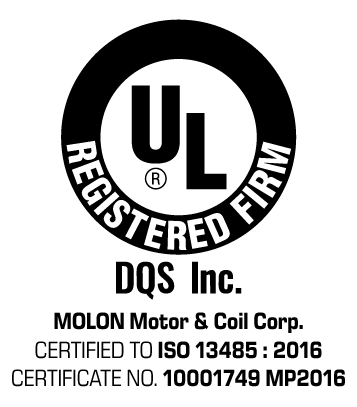
Whether developing high-reliability medical actuators certified to ISO 13485:2016, continuous-duty refrigeration auger drives, or custom brushless EV sub-assemblies under ISO 9001:2015 quality systems, Molon ensures absolute batch-to-batch repeatability and field durability.
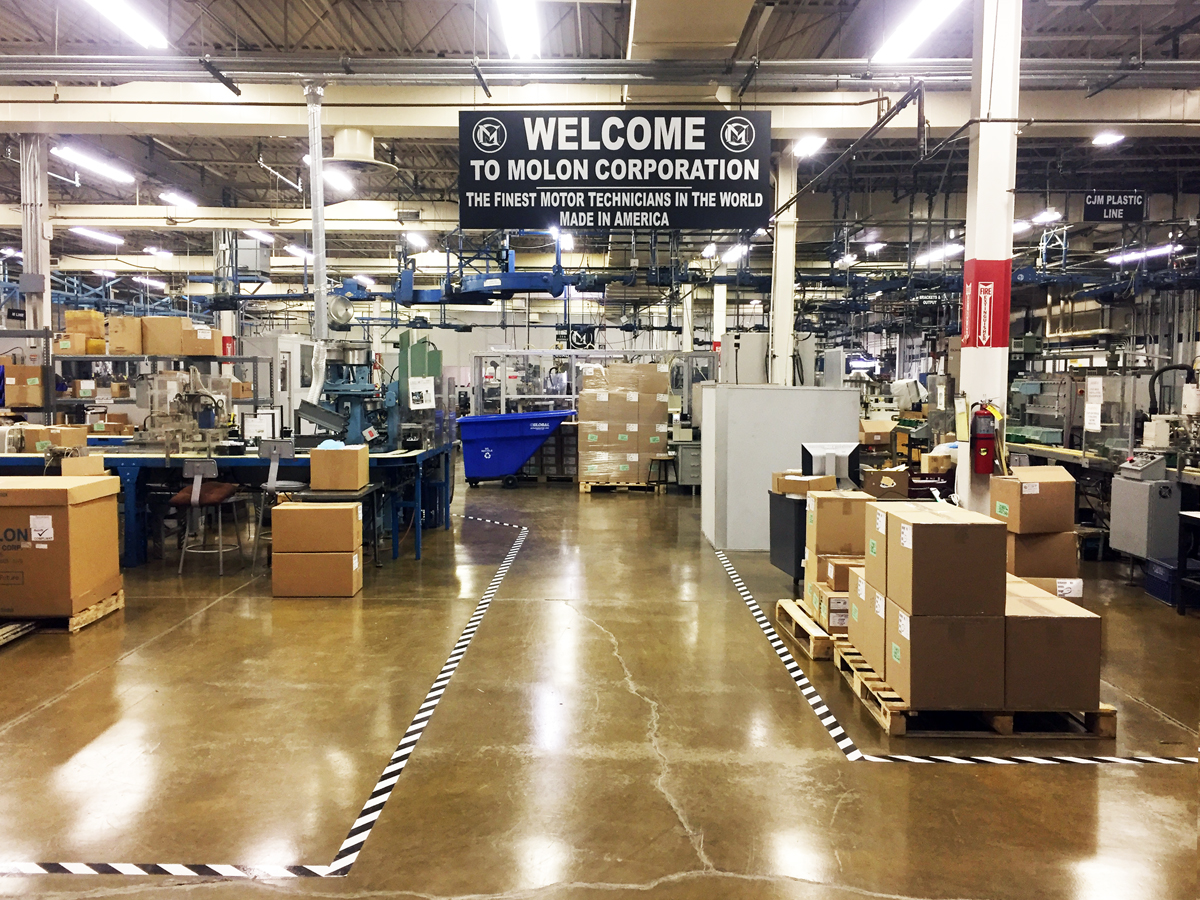
From automated stator winding to 100% computerized end-of-line dynamometer testing, all operations reside under one roof. Engineering modifications feed directly to production cells without communication delays or overseas shipping lags.
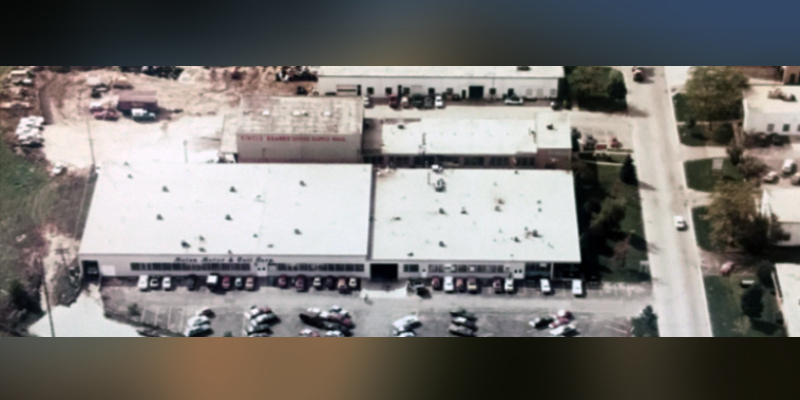
Our secondary production and logistics facility in Rolling Meadows, IL expands manufacturing footprint to handle high-volume OEM release schedules, safety stock buffer management, and rapid prototype turnarounds.
To assist international procurement managers, quality assurance auditors, and OEM system architects in sourcing high-performance linear motors, gearmotors, and custom traction assemblies, our senior engineering staff has addressed key technical inquiries:
Trusted linear motors exporters provide deep technical validation, custom winding customization, continuous force thermal modeling, and full material traceability under certified quality systems (such as ISO 9001:2015 or ISO 13485:2016). Rather than selling standard off-the-shelf component catalog numbers, leading exporters conduct comprehensive duty-cycle reviews, analyze overhung/radial loads, optimize magnet configurations (e.g., Neodymium iron boron grades up to N52SH), and supply 100% dynamometer inspection reports prior to export shipment.
Linear motors eliminate all intermediate mechanical transmission components (ball screws, couplings, belts), delivering direct electromagnetic coupling to the load. This yields acceleration rates exceeding $10\text{G}$, velocities up to $10\text{ m/s}$, sub-micron positioning resolution, and zero mechanical backlash. Furthermore, because there are no contacting mechanical parts subject to friction wear, linear motor systems exhibit operational lifespans significantly longer than ball-screw assemblies.
Using multi-axis CNC machining centers, specialized exporters produce electric vehicle (EV) traction motor housings and aluminum casings to tight tolerances within ±0.01mm. This precision is essential to maintain uniform airgap distances between stator laminations and high-speed rotor assemblies, prevent bearing misalignment, and guarantee zero coolant leakages across internal fluid jacket channels under high pressure.
ISO 13485:2016 specifies comprehensive quality management requirements for medical device components. When sourcing motors or linear actuators for infusion pumps, diagnostic analyzers, surgical robots, or patient support tables, ISO 13485 compliance guarantees strict risk management, complete component lot traceability, documented engineering change control (ECN), and cleanroom-compatible assembly protocols required by international regulatory bodies (such as FDA and CE).
Integrated joint modules utilizing dual inductive encoders (such as the Foxtech DAMIAO DM-JH11) measure position at both the high-speed motor shaft and the output side of the harmonic gearhead. This dual feedback structure eliminates position tracking errors caused by gear flexure, thermal expansion, or harmonic backlash, allowing humanoid AI robots and articulated robotic arms to achieve millimeter-level endpoint repeatability during complex trajectories.
OEM customization options include custom stator winding wire gauges for specific AC or DC operating voltages, specialized shaft geometries (D-flats, keyways, splines, cross-holes), high-temperature synthetic gear greases, integrated electromagnetic brakes, internal thermal overload protectors, UL-recognized insulation systems (Class B, F, or H), and customer-specific wire harness terminations.