

Technical Whitepaper: Optimizing Industrial Vibration Motor Selection for Uzbekistan’s Growing Manufacturing & Mining Sector
As Central Asia's premier manufacturing base, Uzbekistan is experiencing unprecedented industrial expansion under the "Strategy Uzbekistan - 2030". From heavy mineral processing plants in the Navoi region to automated agricultural packaging facilities in the Fergana Valley and urban infrastructure projects across Tashkent, the demand for high-reliability vibration motors has shifted from basic mechanical agitators to precision-engineered rotary exciters and electro-dynamic actuators.
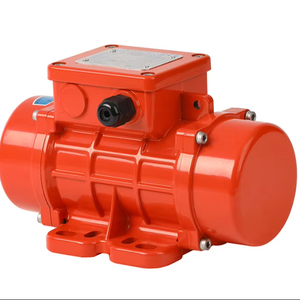
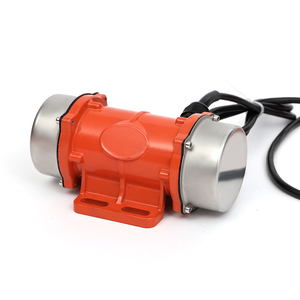
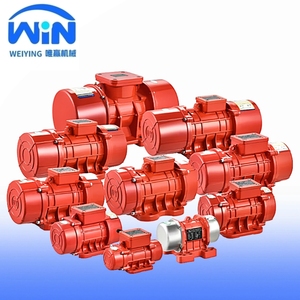
As a specialized manufacturer with seven decades of motor engineering heritage, our facility manufactures AC rotary vibrators, mini vibration feeders, permanent magnet DC vibration motors, and linear resonant actuators (LRA) customized specifically for Eurasian operating conditions. This technical document examines the mechanical dynamics, electrical rating parameters, and climate adaptivity required for long-term motor performance in Uzbekistan.
1. Mechanical Centrifugal Force Calculation & Frequency Dynamics
Industrial vibratory motion relies on centrifugal force ($F_c$) generated by rotating eccentric weights attached to both ends of the motor rotor shaft. The centrifugal force magnitude is dictated by the rotational speed ($\omega$) and the unbalance mass moment ($m \cdot r$):
Where m is the mass of the eccentric weights, r is the distance from the shaft center to the mass center of gravity, and n is the motor shaft speed in RPM.
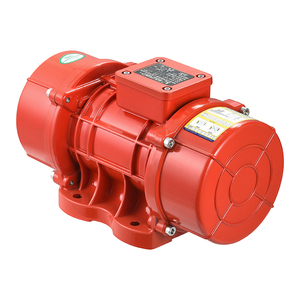
In Uzbekistan, the primary electrical grid operates at 50 Hz. When selecting 2-pole AC induction vibrator motors (such as the MVE or YZS series), nominal synchronous speeds operate at 3000 RPM at 50Hz, compared to 3600 RPM at 60Hz. Because centrifugal force increases quadratically with speed ($\omega^2$), engineering teams must explicitly calibrate eccentric mass settings to ensure output force specs meet the mechanical requirements of local vibrating screens and block molding equipment.
| Motor Series | Phase / Voltage (Uzbek Standard) | Poles / Speed @ 50Hz | Rated Power Range | Primary Industrial Field |
|---|---|---|---|---|
| Oli Wolong Type | 1-Phase 220V / 3-Phase 380V | 2 Pole / 3000 RPM | 0.09 kW - 0.75 kW | Rotary vibrating screens, food sorting |
| MVE / YZS Heavy Duty | 3-Phase 380V / 660V | 2 / 4 / 6 Pole (1000 - 3000 RPM) | 0.12 kW - 11 kW | Mining ore screens, coal chutes, hoppers |
| 30W Mini AC Feeder | 1-Phase 220V / 3-Phase 380V | 2 Pole / 3000 RPM | 30 Watt output | Small concrete block sieves, lab shakers |
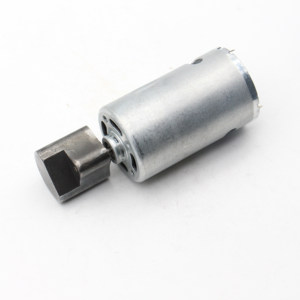
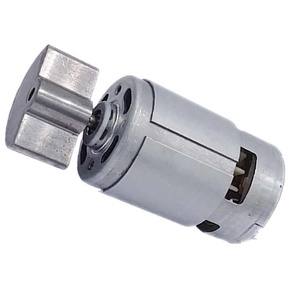
| 775 Fan DC Vibration | 12V / 24V DC | Variable speed (4000-8000 RPM) | 60 Watt | Mobile equipment, automated massagers |
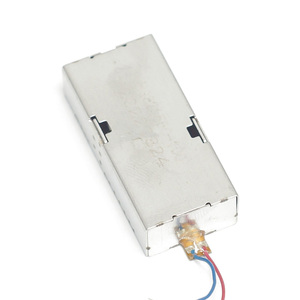
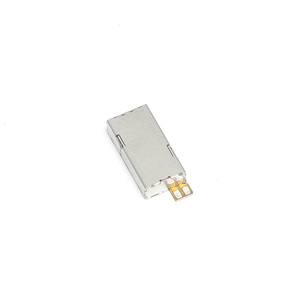
| X-Axis Micro LRA | AC Drive Vp-p 5.66V | 100 Hz Resonant Freq. | Micro-watt range | Tactile haptic devices, AR/VR controllers |
2. Environmental Resilience: Kyzylkum Desert Climate & IP66 Sealing
Machinery operating in Central Asia faces severe thermal fluctuations—ranging from freezing winter temperatures (-20°C) to scorching summer conditions (+45°C to +55°C ambient in desert zones)—alongside high concentrations of airborne silica dust. Standard off-the-shelf motors often suffer premature bearing failure and winding insulation breakdown under these conditions.
To overcome these challenges, our factory builds industrial vibration motors exported to Uzbekistan with key durability upgrades:
- Class H Winding Insulation: Rated to withstand operating temperatures up to 180°C, providing a high safety margin during continuous high-load vibrating operations in summer months.
- Dual-Lip Oil Seals & O-Ring Enclosures: Fully sealed terminal boxes and end-covers providing IP65 or IP66 dust-tight and water-jet protection.
- Heavy-Duty C3 Clearance Bearings: Packed with high-temperature synthetic polyurea grease designed for high centrifugal acceleration ($g$-forces up to 15g) without grease migration.
- Ductile Iron & Reinforced Aluminum Frames: High-tensile cast housings designed to absorb cyclic fatigue stress and prevent mounting foot fracture.
3. Micro Vibration & Haptic Engine Technological Advances
Beyond heavy industrial agitators, Central Asian consumer electronics manufacturing and specialized diagnostic equipment rely heavily on micro-vibration components. Linear Resonant Actuators (LRA) represent a significant technological leap over traditional Eccentric Rotating Mass (ERM) motors.
By oscillating a magnetic mass linearly along an X-axis driven by an internal voice coil at 100 Hz resonant frequency, LRAs achieve rapid start-stop response times (<10ms) and up to 50% lower power consumption. This makes them ideal for modern gaming controllers, medical tactile interfaces, and handheld diagnostic tools assembled in regional high-tech parks.